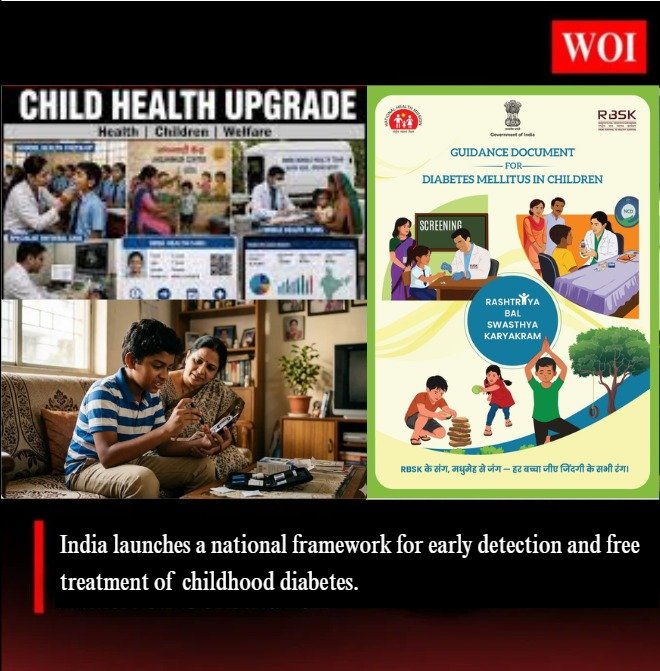
The Ministry of Health and Family Welfare has introduced a comprehensive national framework to manage childhood diabetes, marking a significant step in strengthening India’s public healthcare system. The initiative focuses on early screening, timely diagnosis, effective treatment, and long-term care for children from birth to 18 years.
For the first time, a structured approach through the “Guidance Document on Diabetes Mellitus in Children” has been implemented nationwide. It aims to create a seamless healthcare system by linking community-level screening with advanced hospital treatment, ensuring that children receive continuous and coordinated care.
A key feature of the framework is universal screening through schools and community platforms. The initiative promotes early detection using the “4Ts” awareness model—Toilet, Thirsty, Tired, and Thinner—to help parents and caregivers identify symptoms of Type 1 Diabetes at an early stage. Suspected cases are referred for immediate testing and further diagnosis at district hospitals.
The programme also ensures free treatment at public health facilities, including insulin therapy, diagnostic services, glucometers, and regular monitoring. This removes financial barriers and supports uninterrupted care, which is crucial for managing diabetes in children.
Overall, the framework represents a major policy shift towards addressing non-communicable diseases among children in India. By combining early detection, free treatment, and integrated healthcare delivery, it aims to reduce complications, improve quality of life, and lower mortality associated with childhood diabetes.
