
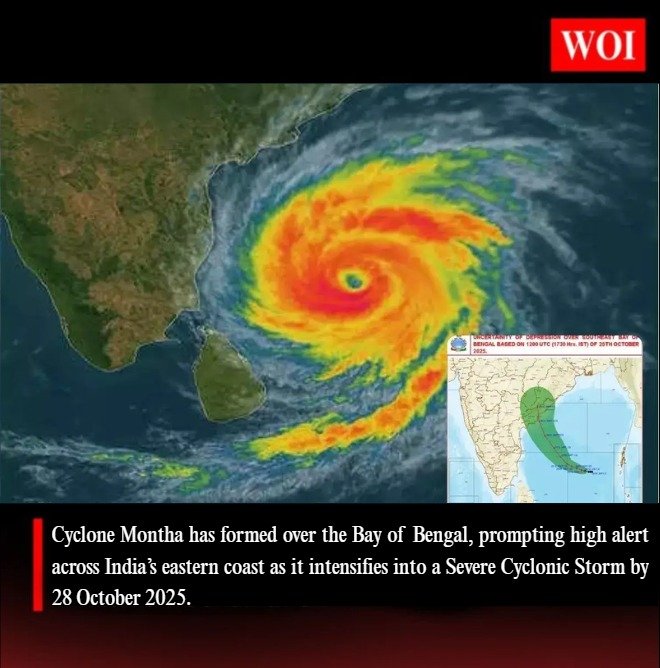
India’s eastern coastline is on high alert as Cyclone Montha intensifies over the southeast Bay of Bengal, with the India Meteorological Department (IMD) predicting it will strengthen into a Severe Cyclonic Storm (SCS) by 28 October 2025. The storm is expected to impact Andhra Pradesh, Tamil Nadu, Odisha, Telangana, Kerala, and Chhattisgarh, bringing heavy rainfall and strong winds.
How Cyclone Montha Formed
Cyclone Montha developed from a low-pressure area over warm ocean waters — the ideal breeding ground for tropical cyclones.
As warm air rises and cools, it forms dense storm clouds and spiraling winds driven by the Coriolis effect.
With sea surface temperatures above 27°C and low wind shear, Montha rapidly gained strength, evolving into a cyclonic system.
Why the Bay of Bengal Sees More Cyclones
The Bay of Bengal is one of the world’s most cyclone-prone regions due to its warm, shallow waters, high humidity, and enclosed geography.
These conditions allow low-pressure systems to intensify quickly, especially during the post-monsoon months (October–November).
Naming the Cyclone
The name “Montha”, contributed by Thailand, comes from the WMO-ESCAP panel’s list of cyclone names for the North Indian Ocean.
Cyclone naming ensures clear communication and public awareness during simultaneous weather events.
Forecast and Impact
- Expected to reach Severe Cyclonic Storm status by 28 October
- Likely landfall between Kakinada and Kalingapatnam (Andhra Pradesh)
- Heavy rains forecast across Andhra Pradesh, Odisha, Tamil Nadu, Kerala, and Telangana
- Fishermen warned to stay ashore; schools closed in several coastal districts
- Possible storm surge, wind damage, and power disruptions in vulnerable areas
The Bigger Picture
Cyclone Montha underscores the growing importance of disaster preparedness, early warning systems, and climate resilience.
With rising sea temperatures linked to climate change, India’s coastal states face increasing cyclone risks, making community awareness and infrastructure planning vital.
