

From Boardrooms to Ballot Boxes: A New Roadmap for Professional Participation in Indian Politics
By Chief Bureau
NEW DELHI, October 16, 2026: Seeking to bring India’s professional community closer to political decision-making, the All India Professionals’ Congress (AIPC) has outlined an ambitious expansion plan targeting 50,000 members and organisational activities across 100 urban districts, as former two-term Member of Parliament Madhu Goud Yaskhi formally assumed charge as its National Chairman.
The charge-taking ceremony, held on October 15 at the All India Congress Committee (AICC) headquarters, Indira Bhavan, New Delhi, marked the formal leadership transition from outgoing chairman Praveen Chakravarty. Senior Congress leaders, AIPC representatives and professionals gathered to discuss economic inequality, democratic institutions, scientific development, technological challenges and the role of professional expertise in public life.
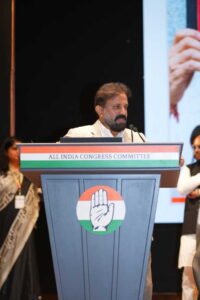
“Not Just a Position, but a Responsibility”: Yaskhi Outlines His Vision
In his acceptance address, Yaskhi described the chairmanship as a responsibility towards the country, its people and the Constitution, rather than merely an organisational position.
He announced plans to build a 50,000-member professional network, strengthen state and district committees and expand the AIPC’s activities across 100 urban districts.
Drawing inspiration from Dr. B.R. Ambedkar’s principles of education, organisation and collective action, Yaskhi called for greater involvement of doctors, lawyers, engineers, journalists, academicians, scientists, entrepreneurs and technology specialists in policymaking and democratic participation.
Linking the organisation’s proposed expansion to Rahul Gandhi’s vision of social justice, constitutional safeguards and inclusive political leadership, Yaskhi stressed the importance of protecting democratic institutions and creating opportunities for younger generations to participate in public affairs.
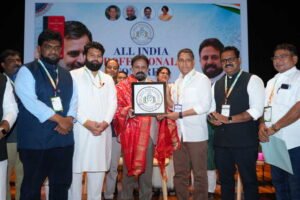 He also acknowledged the contributions of former AIPC chairpersons Shashi Tharoor and Praveen Chakravarty, emphasising continuity alongside organisational expansion.
“Scientific Thinking and Professional Knowledge Are Essential”: Sam Pitroda
Addressing the gathering virtually, Sam Pitroda, Chairman of the Indian Overseas Congress, emphasised the role of science, technology and evidence-based policymaking in nation-building.
Recalling India’s development after Independence, he referred to Jawaharlal Nehru’s emphasis on involving technical specialists in sectors such as aviation, transportation, healthcare, agriculture, railways and industrial development.
 Pitroda stressed that effective national planning required reliable data, professional knowledge and a clear understanding of sector-specific challenges.
He encouraged the establishment of AIPC committees across districts and greater involvement of doctors, teachers, engineers, scientists and other specialists in public welfare initiatives.
“Professionals Must Become Active Participants in Politics”: Praveen Chakravarty
Formally handing over responsibilities, outgoing chairman Praveen Chakravarty stressed that professionals should move beyond their workplaces and participate more actively in political decision-making.
He highlighted the importance of engaging India’s urban professional communities, observing that professional expertise could contribute to strengthening public policy and organisational development.
Chakravarty also drew attention to the Congress party’s historical electoral strength in urban constituencies and argued that reconnecting with these communities was important for the party’s future.
Expressing confidence in Yaskhi, he said the new leadership could build upon the AIPC’s existing organisational foundations.
“Economic Growth Must Benefit Employees, Not Just Corporations”: Gurdeep Singh Sappal
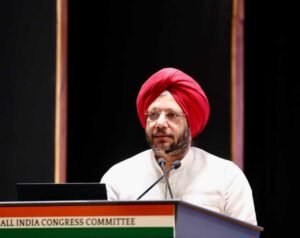 Congress Working Committee member Gurdeep Singh Sappal raised concerns about widening economic disparities and the distribution of corporate earnings.
He alleged that corporate profits had increased significantly under the BJP-led government while employee salaries had not grown proportionately.
Referring particularly to IT professionals, Sappal questioned stagnant wage growth and argued that economic development should translate into improved living standards for working people.
He also criticised what he described as the weakening of public institutions and called for greater professional participation in evaluating government policies and strengthening democratic accountability.
“India’s Scientific Talent Must Contribute to National Development”: Deepender Singh Hooda
 Member of Parliament Deepender Singh Hooda highlighted the importance of scientific and technological expertise in India’s development.
He urged the AIPC to involve engineers, scientists, software professionals and specialists from diverse sectors in public affairs.
Hooda argued that India possessed substantial talent and resources but needed stronger policies and organisational platforms to realise its development potential.
He also called for the expansion of AIPC networks across northern India to bring more professionals into political and public policy discussions.
 “Education and Equal Opportunity Must Reach Every Section”: Raj Pal Gautam
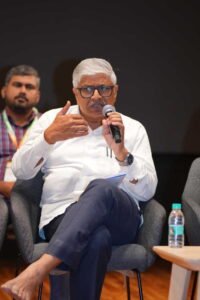 “Education and Equal Opportunity Must Reach Every Section”: Raj Pal Gautam
AICC General Secretary Raj Pal Gautam emphasised the importance of education, social equality and opportunities for disadvantaged communities.
Referring to India’s freedom struggle and the contributions of social reformers, including Jyotirao and Savitribai Phule, he highlighted the role of education in advancing social justice.
Gautam criticised what he described as policies favouring selected corporate interests and urged professionals to use research, data and expertise to address contemporary social and economic challenges.
Deepa Dasmunsi Releases AIPC Song; Senior Leaders Attend
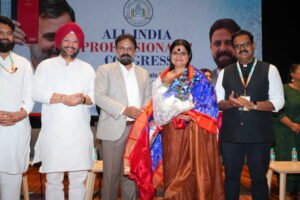
AICC General Secretary Deepa Dasmunsi participated in the ceremony and released a newly prepared AIPC song.
Senior Congress leader and former Members of Parliament Udit Raj ,Sarvey Sathyanarayana, along with other party representatives and AIPC members, also attended the programme.
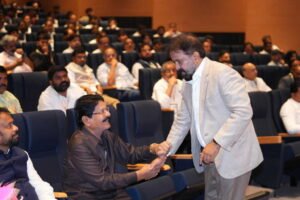
The event brought together leaders and professionals from different backgrounds as the organisation prepared for its next phase of national expansion.
“Misinformation and Misuse of Technology Demand Attention”: Interactive Q&A
An interactive question-and-answer session brought together AIPC national leaders, AICC members, senior Congress functionaries and dignitaries, including Gurdeep Singh Sappal, for discussions on national and organisational issues.
During the session, Pramod Reddy raised concerns about misinformation and the misuse of technology, drawing attention to the challenges facing democratic discourse in an increasingly digital society.

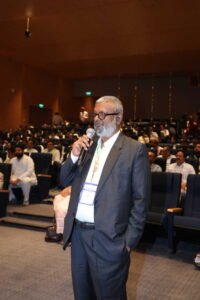
Responding to the issue, Sam Pitroda emphasised that professionals should voluntarily dedicate their knowledge, skills and time to public welfare, community development and nation-building.
The exchange highlighted the importance of responsible technology use, informed public participation and the contribution professionals can make beyond their regular occupations.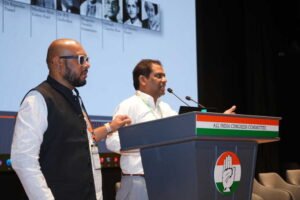
“From Professional Careers to Public Leadership”: Manmohan Singh Fellowship
The AIPC’s leadership-development efforts also featured in the discussions, particularly through the Dr. Manmohan Singh Fellows Programme, designed to encourage professionals to participate in politics and public policymaking.
The programme’s first cohort comprised 50 fellows, while its second phase aims to provide opportunities for 100 professionals.
The initiative is intended to create pathways for skilled individuals to gain experience in public policy, political processes and leadership responsibilities.
The organisation’s expansion plans also seek wider engagement with young professionals, women, journalists, academicians, entrepreneurs, lawyers and researchers.
“From Delhi to Districts”: AIPC’s National Roadmap
 With parliamentary experience representing Nizamabad in the 14th and 15th Lok Sabha, Yaskhi takes charge of the AIPC at a time when the Congress is seeking to strengthen its engagement with professional communities across India.
The immediate priorities include establishing effective state and district committees, improving coordination among existing members and former office-bearers, and encouraging professionals to contribute to public policy discussions and community initiatives.
The proposed 50,000-member target and expansion across 100 urban districts will serve as measurable benchmarks for the organisation’s progress.
The October 15 ceremony brought together perspectives on economic growth, constitutional values, scientific development, social equality and professional responsibility.


Whether the AIPC can translate these plans into functioning grassroots networks and sustained public engagement will determine the impact of its next phase under Madhu Goud Yaskhi.
