
Monday, September 28, 2026
HomeIndiaOn Manmohan Singh’s 94th Birth Anniversary, Yaskhi Takes Forward His Vision of...

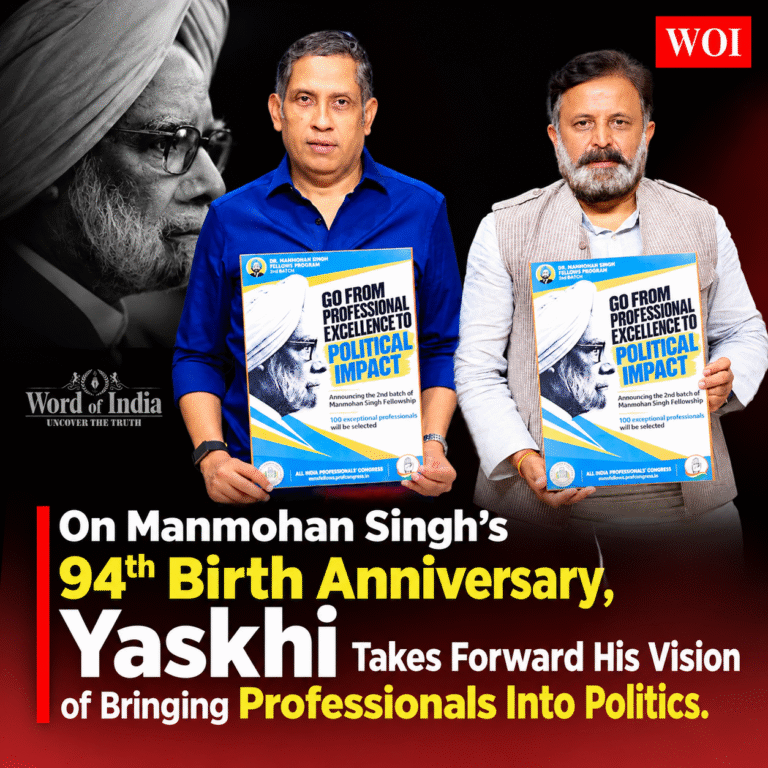
On Manmohan Singh’s 94th Birth Anniversary, Yaskhi Takes Forward His Vision of Bringing Professionals Into Politics

In his first press conference as AIPC Chairman, Madhu Goud Yaskhi calls on professionals to enter public life; Praveen Chakravarty reflects on the inaugural cohort as AIPC marks the former Prime Minister’s 94th birth anniversary

By Shashank Pasupuleti 

NEW DELHI, September 26: In his first press conference after taking charge as Chairman of the All India Professionals Congress (AIPC), former MP Madhu Goud Yaskhi on Saturday announced that the second batch of the Dr. Manmohan Singh Fellows Programme would be expanded to 100 professionals, doubling the strength of its inaugural cohort.

The announcement, made on former Prime Minister Dr. Manmohan Singh’s 94th birth anniversary, was presented by Yaskhi as both a tribute to Singh’s legacy and an effort to create a wider pathway for professionals seeking to contribute to politics, policymaking and public life.

“The most fitting tribute we can pay to him is to continue the Dr. Manmohan Singh Fellowship Programme,” Yaskhi said.

Acknowledging his immediate predecessor, Praveen Chakravarty, the programme coordinators and members of the inaugural Fellowship cohort, Yaskhi said the experience of the first batch had encouraged AIPC to substantially scale up the initiative.

He said the calibre of professionals in the inaugural cohort, along with growing interest among professionals seeking to contribute to politics, policymaking and nation-building, had convinced AIPC of the need to expand the opportunity.
Acknowledging his immediate predecessor, Praveen Chakravarty

Second Batch Expanded From 50 to 100

Making the principal announcement of the press conference, Yaskhi said the Fellowship would be expanded to 100 participants for the coming year.

He said applicants would be given approximately one month to apply, with further details to be made available through the programme’s dedicated platform.

Yaskhi said Khalid Saifullah and Pallavi would share further details and updates on the Dr. Manmohan Singh Fellowship Programme in the coming days.

He also said the expansion followed Rahul Gandhi’s interaction with members of the inaugural cohort.

“Honourable Leader of the Opposition, after meeting the first batch of Manmohan Singh  Fellows, asked us to scale it up and continue this programme,” Yaskhi said.
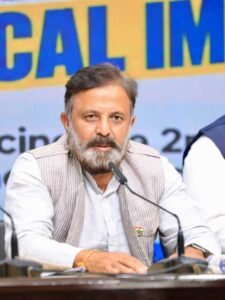

MADHU Goud YASHKIThe Fellowship is designed as a political leadership incubator, offering experienced professionals exposure to political assignments, mentorship and public leadership.

‘Professionals Can Enter Public Life’

Yaskhi placed the announcement within a broader appeal for professionals to participate directly in the political process.

“As Dr. Manmohan Singh always believed, politics is a powerful instrument for purposeful social change,” Yaskhi said.

He argued that professionals should bring expertise from fields such as economics, business, technology, law, medicine, academia and public policy into political decision-making.

“Professionals can enter into public life, bring their expertise into politics, policymaking and nation-building,” he said.

Yaskhi also referred to the role professionals have played in the Congress over the years and urged a new generation to participate in public life.

Yaskhi Recalls Working During Manmohan Singh Era

Yaskhi, who served as a Member of Parliament during the Manmohan Singh-led UPA government, brought a personal dimension to his tribute.

“I was fortunate to work under him as a Member of Parliament,” Yaskhi said.

He credited Singh’s leadership with steering India through a period of global economic turbulence and said important foundations for the country’s subsequent economic development were laid during the UPA years under Singh and UPA Chairperson Sonia Gandhi.

Yaskhi also highlighted rights-based legislation and initiatives associated with the UPA era, including employment guarantees, education measures and the Right to Information Act.

Reflecting on Singh’s leadership style, Yaskhi said the former Prime Minister was a leader who listened to the people of India more than he spoke.

Yaskhi also criticised the present government’s claims on economic performance and alleged that the BJP had politically encouraged protests over issues including the Lokpal during the UPA period.

‘You Don’t Have to Be a Party Member’

One of Yaskhi’s central messages was that professionals interested in public affairs should not assume that participation must necessarily begin with conventional party membership.

He said professionals did not have to begin as members of a political party to contribute their knowledge and experience to public affairs.

“With their experience, they can be part of politics, policymaking and nation-building,” he said.

Yaskhi appealed through the media to professionals interested in what he described as building an inclusive and democratic India to apply for the Fellowship.

Chakravarty: Fellowship Provides a ‘Path’ Into Public Life

Earlier, opening the press conference, Praveen Chakravarty paid tribute to Dr. Manmohan Singh and explained the thinking behind the Fellowship’s creation.

“Dr. Manmohan Singh is perhaps India’s most consequential and significant professional-turned-political leader,” Chakravarty said.

He said the programme had been conceived to provide professionals interested in public affairs with a structured pathway to political participation.

“The idea was to get professionals who care for a progressive, liberal country and want to do something about it — to give them a path, to give them a way to get involved,” he said.

The inaugural cohort consisted of 50 Fellows selected from a large applicant pool and represented a range of professional, regional and social backgrounds.

At the press conference, Chakravarty said the Fellows came from more than 16 states, around one-third were women, 46 of the 50 were below the age of 50, and about half were under 40.

He said approximately 56 per cent came from OBC, SC and minority backgrounds.

Reflecting on the programme’s first year, Chakravarty said:

“There can always be things that we could have done better, we could have done more, but for a first batch, it got off to a great start.”

He said the first cohort participated in a range of organisational assignments and training programmes during the Fellowship.

The Fellowship’s commencement was presided over by Congress President and Leader of the Opposition in the Rajya Sabha Mallikarjun Kharge. Leader of the Opposition in the Lok Sabha Rahul Gandhi presided over the inaugural cohort’s graduation ceremony, which was attended by AICC General Secretary and Member of Parliament Priyanka Gandhi Vadra.

Chakravarty Raises Institutional Concerns

Chakravarty also used the occasion to contrast what he described as Singh’s commitment to democratic institutions with his concerns over the current political environment.

Referring specifically to the Election Commission, Chakravarty expressed concern over what he described as attacks on institutions, contrasting the situation with Singh’s emphasis on institutional integrity and democratic norms.

“No other Prime Minister in the recent past has given more importance to institutions and the idea of India’s democracy than Dr. Manmohan Singh,” Chakravarty said.

Fellows Detail Work From Startups to Climate Policy

The press conference also featured members of the inaugural cohort, who offered examples of how their professional expertise had been applied during the Fellowship.

Entrepreneur Tarusha said she helped establish AIPC’s startup domain and contributed to technology tools, organisational initiatives and work connected with the organisation’s UPI-MDR campaign.On Manmohan Singh’s 94th Birth Anniversary, Yaskhi Takes Forward His Vision of Bringing Professionals Into Politics In his first press conference as AIPC Chairman, Madhu Goud Yaskhi calls on professionals to enter public life; Praveen Chakravarty reflects on the inaugural cohort as AIPC marks the former Prime Minister’s 94th birth anniversary By Shashank Pasupuleti | National Reporter NEW DELHI, September 26: In his first press conference after taking charge as Chairman of the All India Professionals Congress (AIPC), former MP Madhu Goud Yaskhi on Saturday announced that the second batch of the Dr. Manmohan Singh Fellows Programme would be expanded to 100 professionals, doubling the strength of its inaugural cohort. The announcement, made on former Prime Minister Dr. Manmohan Singh’s 94th birth anniversary, was presented by Yaskhi as both a tribute to Singh’s legacy and an effort to create a wider pathway for professionals seeking to contribute to politics, policymaking and public life. > “The most fitting tribute we can pay to him is to continue the Dr. Manmohan Singh Fellowship Programme,” Yaskhi said. Acknowledging his immediate predecessor, Praveen Chakravarty, the programme coordinators and members of the inaugural Fellowship cohort, Yaskhi said the experience of the first batch had encouraged AIPC to substantially scale up the initiative. He said the calibre of professionals in the inaugural cohort, along with growing interest among professionals seeking to contribute to politics, policymaking and nation-building, had convinced AIPC of the need to expand the opportunity. Second Batch Expanded From 50 to 100 Making the principal announcement of the press conference, Yaskhi said the Fellowship would be expanded to 100 participants for the coming year. He said applicants would be given approximately one month to apply, with further details to be made available through the programme’s dedicated platform. Yaskhi said Khalid Saifullah and Pallavi would share further details and updates on the Dr. Manmohan Singh Fellowship Programme in the coming days. He also said the expansion followed Rahul Gandhi’s interaction with members of the inaugural cohort. > “Honourable Leader of the Opposition, after meeting the first batch of Manmohan Singh ji’s Fellows, asked us to scale it up and continue this programme,” Yaskhi said. The Fellowship is designed as a political leadership incubator, offering experienced professionals exposure to political assignments, mentorship and public leadership. ‘Professionals Can Enter Public Life’ Yaskhi placed the announcement within a broader appeal for professionals to participate directly in the political process. > “As Dr. Manmohan Singh always believed, politics is a powerful instrument for purposeful social change,” Yaskhi said. He argued that professionals should bring expertise from fields such as economics, business, technology, law, medicine, academia and public policy into political decision-making. > “Professionals can enter into public life, bring their expertise into politics, policymaking and nation-building,” he said. Yaskhi also referred to the role professionals have played in the Congress over the years and urged a new generation to participate in public life. Yaskhi Recalls Working During Manmohan Singh Era Yaskhi, who served as a Member of Parliament during the Manmohan Singh-led UPA government, brought a personal dimension to his tribute. > “I was fortunate to work under him as a Member of Parliament,” Yaskhi said. He credited Singh’s leadership with steering India through a period of global economic turbulence and said important foundations for the country’s subsequent economic development were laid during the UPA years under Singh and UPA Chairperson Sonia Gandhi. Yaskhi also highlighted rights-based legislation and initiatives associated with the UPA era, including employment guarantees, education measures and the Right to Information Act. Reflecting on Singh’s leadership style, Yaskhi said the former Prime Minister was a leader who listened to the people of India more than he spoke. Yaskhi also criticised the present government’s claims on economic performance and alleged that the BJP had politically encouraged protests over issues including the Lokpal during the UPA period. ‘You Don’t Have to Be a Party Member’ One of Yaskhi’s central messages was that professionals interested in public affairs should not assume that participation must necessarily begin with conventional party membership. He said professionals did not have to begin as members of a political party to contribute their knowledge and experience to public affairs. > “With their experience, they can be part of politics, policymaking and nation-building,” he said. Yaskhi appealed through the media to professionals interested in what he described as building an inclusive and democratic India to apply for the Fellowship. Chakravarty: Fellowship Provides a ‘Path’ Into Public Life Earlier, opening the press conference, Praveen Chakravarty paid tribute to Dr. Manmohan Singh and explained the thinking behind the Fellowship’s creation. > “Dr. Manmohan Singh is perhaps India’s most consequential and significant professional-turned-political leader,” Chakravarty said. He said the programme had been conceived to provide professionals interested in public affairs with a structured pathway to political participation. > “The idea was to get professionals who care for a progressive, liberal country and want to do something about it — to give them a path, to give them a way to get involved,” he said. The inaugural cohort consisted of 50 Fellows selected from a large applicant pool and represented a range of professional, regional and social backgrounds. At the press conference, Chakravarty said the Fellows came from more than 16 states, around one-third were women, 46 of the 50 were below the age of 50, and about half were under 40. He said approximately 56 per cent came from OBC, SC and minority backgrounds. Reflecting on the programme’s first year, Chakravarty said: > “There can always be things that we could have done better, we could have done more, but for a first batch, it got off to a great start.” He said the first cohort participated in a range of organisational assignments and training programmes during the Fellowship. The Fellowship’s commencement was presided over by Congress President and Leader of the Opposition in the Rajya Sabha Mallikarjun Kharge. Leader of the Opposition in the Lok Sabha Rahul Gandhi presided over the inaugural cohort’s graduation ceremony, which was attended by AICC General Secretary and Member of Parliament Priyanka Gandhi Vadra. Chakravarty Raises Institutional Concerns Chakravarty also used the occasion to contrast what he described as Singh’s commitment to democratic institutions with his concerns over the current political environment. Referring specifically to the Election Commission, Chakravarty expressed concern over what he described as attacks on institutions, contrasting the situation with Singh’s emphasis on institutional integrity and democratic norms. > “No other Prime Minister in the recent past has given more importance to institutions and the idea of India’s democracy than Dr. Manmohan Singh,” Chakravarty said. Fellows Detail Work From Startups to Climate Policy The press conference also featured members of the inaugural cohort, who offered examples of how their professional expertise had been applied during the Fellowship. Entrepreneur Tarusha said she helped establish AIPC’s startup domain and contributed to technology tools, organisational initiatives and work connected with the organisation’s UPI-MDR campaign. > “It has been a fantastic experience for me so far,” she said. Development economist Varna said she worked with district-level Congress functionaries to help communicate economic concepts at the grassroots. > “Economics is quite complex and not easily translated to the ground,” she said. She also spoke about her involvement in fieldwork and data-related assignments. Climate and sustainability professional Atul Muthiyar said his Fellowship work focused on air quality as a public issue, involving engagement with civil society, the media, experts and practitioners over several months. He said his work examined not only the government’s role in tackling air pollution but also the responsibilities of civil society and the role politics can play in addressing the issue. From 50 Fellows to a Larger Political Experiment The second cohort’s expansion from 50 to 100 Fellows represents the first major scaling-up of the programme and comes alongside a leadership transition within AIPC. Chakravarty’s tenure saw the Fellowship launched and its inaugural cohort complete the programme. Yaskhi now takes charge as the initiative moves into a substantially larger second phase. For Yaskhi, the programme’s stated objective extends beyond simply increasing the number of Fellows. His remarks at his first press conference as AIPC Chairman centred on the proposition that experienced professionals need not remain observers of politics or abandon their professional expertise in order to participate in public life. On Dr. Manmohan Singh’s 94th birth anniversary, the announcement placed the Fellowship’s next phase around a central objective: creating a wider pathway for professionals and intellectuals to engage with politics, policymaking, nation-building and public service.
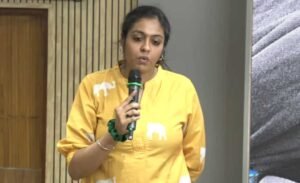
“It has been a fantastic experience for me so far,” she said.

Development economist Varna said she worked with district-level Congress functionaries to help communicate economic concepts at the grassroots.
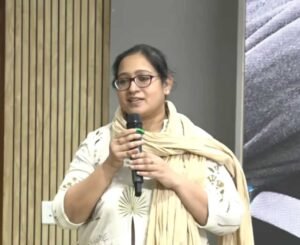
“Economics is quite complex and not easily translated to the ground,” she said.

She also spoke about her involvement in fieldwork and data-related assignments.
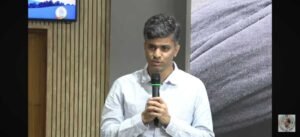
On Manmohan Singh’s 94th Birth Anniversary, Yaskhi Takes Forward His Vision of Bringing Professionals Into Politics In his first press conference as AIPC Chairman, Madhu Goud Yaskhi calls on professionals to enter public life; Praveen Chakravarty reflects on the inaugural cohort as AIPC marks the former Prime Minister’s 94th birth anniversary By Shashank Pasupuleti | National Reporter NEW DELHI, September 26: In his first press conference after taking charge as Chairman of the All India Professionals Congress (AIPC), former MP Madhu Goud Yaskhi on Saturday announced that the second batch of the Dr. Manmohan Singh Fellows Programme would be expanded to 100 professionals, doubling the strength of its inaugural cohort. The announcement, made on former Prime Minister Dr. Manmohan Singh’s 94th birth anniversary, was presented by Yaskhi as both a tribute to Singh’s legacy and an effort to create a wider pathway for professionals seeking to contribute to politics, policymaking and public life. > “The most fitting tribute we can pay to him is to continue the Dr. Manmohan Singh Fellowship Programme,” Yaskhi said. Acknowledging his immediate predecessor, Praveen Chakravarty, the programme coordinators and members of the inaugural Fellowship cohort, Yaskhi said the experience of the first batch had encouraged AIPC to substantially scale up the initiative. He said the calibre of professionals in the inaugural cohort, along with growing interest among professionals seeking to contribute to politics, policymaking and nation-building, had convinced AIPC of the need to expand the opportunity. Second Batch Expanded From 50 to 100 Making the principal announcement of the press conference, Yaskhi said the Fellowship would be expanded to 100 participants for the coming year. He said applicants would be given approximately one month to apply, with further details to be made available through the programme’s dedicated platform. Yaskhi said Khalid Saifullah and Pallavi would share further details and updates on the Dr. Manmohan Singh Fellowship Programme in the coming days. He also said the expansion followed Rahul Gandhi’s interaction with members of the inaugural cohort. > “Honourable Leader of the Opposition, after meeting the first batch of Manmohan Singh ji’s Fellows, asked us to scale it up and continue this programme,” Yaskhi said. The Fellowship is designed as a political leadership incubator, offering experienced professionals exposure to political assignments, mentorship and public leadership. ‘Professionals Can Enter Public Life’ Yaskhi placed the announcement within a broader appeal for professionals to participate directly in the political process. > “As Dr. Manmohan Singh always believed, politics is a powerful instrument for purposeful social change,” Yaskhi said. He argued that professionals should bring expertise from fields such as economics, business, technology, law, medicine, academia and public policy into political decision-making. > “Professionals can enter into public life, bring their expertise into politics, policymaking and nation-building,” he said. Yaskhi also referred to the role professionals have played in the Congress over the years and urged a new generation to participate in public life. Yaskhi Recalls Working During Manmohan Singh Era Yaskhi, who served as a Member of Parliament during the Manmohan Singh-led UPA government, brought a personal dimension to his tribute. > “I was fortunate to work under him as a Member of Parliament,” Yaskhi said. He credited Singh’s leadership with steering India through a period of global economic turbulence and said important foundations for the country’s subsequent economic development were laid during the UPA years under Singh and UPA Chairperson Sonia Gandhi. Yaskhi also highlighted rights-based legislation and initiatives associated with the UPA era, including employment guarantees, education measures and the Right to Information Act. Reflecting on Singh’s leadership style, Yaskhi said the former Prime Minister was a leader who listened to the people of India more than he spoke. Yaskhi also criticised the present government’s claims on economic performance and alleged that the BJP had politically encouraged protests over issues including the Lokpal during the UPA period. ‘You Don’t Have to Be a Party Member’ One of Yaskhi’s central messages was that professionals interested in public affairs should not assume that participation must necessarily begin with conventional party membership. He said professionals did not have to begin as members of a political party to contribute their knowledge and experience to public affairs. > “With their experience, they can be part of politics, policymaking and nation-building,” he said. Yaskhi appealed through the media to professionals interested in what he described as building an inclusive and democratic India to apply for the Fellowship. Chakravarty: Fellowship Provides a ‘Path’ Into Public Life Earlier, opening the press conference, Praveen Chakravarty paid tribute to Dr. Manmohan Singh and explained the thinking behind the Fellowship’s creation. > “Dr. Manmohan Singh is perhaps India’s most consequential and significant professional-turned-political leader,” Chakravarty said. He said the programme had been conceived to provide professionals interested in public affairs with a structured pathway to political participation. > “The idea was to get professionals who care for a progressive, liberal country and want to do something about it — to give them a path, to give them a way to get involved,” he said. The inaugural cohort consisted of 50 Fellows selected from a large applicant pool and represented a range of professional, regional and social backgrounds. At the press conference, Chakravarty said the Fellows came from more than 16 states, around one-third were women, 46 of the 50 were below the age of 50, and about half were under 40. He said approximately 56 per cent came from OBC, SC and minority backgrounds. Reflecting on the programme’s first year, Chakravarty said: > “There can always be things that we could have done better, we could have done more, but for a first batch, it got off to a great start.” He said the first cohort participated in a range of organisational assignments and training programmes during the Fellowship. The Fellowship’s commencement was presided over by Congress President and Leader of the Opposition in the Rajya Sabha Mallikarjun Kharge. Leader of the Opposition in the Lok Sabha Rahul Gandhi presided over the inaugural cohort’s graduation ceremony, which was attended by AICC General Secretary and Member of Parliament Priyanka Gandhi Vadra. Chakravarty Raises Institutional Concerns Chakravarty also used the occasion to contrast what he described as Singh’s commitment to democratic institutions with his concerns over the current political environment. Referring specifically to the Election Commission, Chakravarty expressed concern over what he described as attacks on institutions, contrasting the situation with Singh’s emphasis on institutional integrity and democratic norms. > “No other Prime Minister in the recent past has given more importance to institutions and the idea of India’s democracy than Dr. Manmohan Singh,” Chakravarty said. Fellows Detail Work From Startups to Climate Policy The press conference also featured members of the inaugural cohort, who offered examples of how their professional expertise had been applied during the Fellowship. Entrepreneur Tarusha said she helped establish AIPC’s startup domain and contributed to technology tools, organisational initiatives and work connected with the organisation’s UPI-MDR campaign. > “It has been a fantastic experience for me so far,” she said. Development economist Varna said she worked with district-level Congress functionaries to help communicate economic concepts at the grassroots. > “Economics is quite complex and not easily translated to the ground,” she said. She also spoke about her involvement in fieldwork and data-related assignments. Climate and sustainability professional Atul Muthiyar said his Fellowship work focused on air quality as a public issue, involving engagement with civil society, the media, experts and practitioners over several months. He said his work examined not only the government’s role in tackling air pollution but also the responsibilities of civil society and the role politics can play in addressing the issue. From 50 Fellows to a Larger Political Experiment The second cohort’s expansion from 50 to 100 Fellows represents the first major scaling-up of the programme and comes alongside a leadership transition within AIPC. Chakravarty’s tenure saw the Fellowship launched and its inaugural cohort complete the programme. Yaskhi now takes charge as the initiative moves into a substantially larger second phase. For Yaskhi, the programme’s stated objective extends beyond simply increasing the number of Fellows. His remarks at his first press conference as AIPC Chairman centred on the proposition that experienced professionals need not remain observers of politics or abandon their professional expertise in order to participate in public life. On Dr. Manmohan Singh’s 94th birth anniversary, the announcement placed the Fellowship’s next phase around a central objective: creating a wider pathway for professionals and intellectuals to engage with politics, policymaking, nation-building and public service.Climate and sustainability professional Atul Muthiyar said his Fellowship work focused on air quality as a public issue, involving engagement with civil society, the media, experts and practitioners over several months.

He said his work examined not only the government’s role in tackling air pollution but also the responsibilities of civil society and the role politics can play in addressing the issue.

From 50 Fellows to a Larger Political Experiment

The second cohort’s expansion from 50 to 100 Fellows represents the first major scaling-up of the programme and comes alongside a leadership transition within AIPC.

Chakravarty’s tenure saw the Fellowship launched and its inaugural cohort complete the programme. Yaskhi now takes charge as the initiative moves into a substantially larger second phase.

For Yaskhi, the programme’s stated objective extends beyond simply increasing the number of Fellows. His remarks at his first press conference as AIPC Chairman centred on the proposition that experienced professionals need not remain observers of politics or abandon their professional expertise in order to participate in public life.
On Manmohan Singh’s 94th Birth Anniversary, Yaskhi Takes Forward His Vision of Bringing Professionals Into Politics In his first press conference as AIPC Chairman, Madhu Goud Yaskhi calls on professionals to enter public life; Praveen Chakravarty reflects on the inaugural cohort as AIPC marks the former Prime Minister’s 94th birth anniversary By Shashank Pasupuleti | National Reporter NEW DELHI, September 26: In his first press conference after taking charge as Chairman of the All India Professionals Congress (AIPC), former MP Madhu Goud Yaskhi on Saturday announced that the second batch of the Dr. Manmohan Singh Fellows Programme would be expanded to 100 professionals, doubling the strength of its inaugural cohort. The announcement, made on former Prime Minister Dr. Manmohan Singh’s 94th birth anniversary, was presented by Yaskhi as both a tribute to Singh’s legacy and an effort to create a wider pathway for professionals seeking to contribute to politics, policymaking and public life. > “The most fitting tribute we can pay to him is to continue the Dr. Manmohan Singh Fellowship Programme,” Yaskhi said. Acknowledging his immediate predecessor, Praveen Chakravarty, the programme coordinators and members of the inaugural Fellowship cohort, Yaskhi said the experience of the first batch had encouraged AIPC to substantially scale up the initiative. He said the calibre of professionals in the inaugural cohort, along with growing interest among professionals seeking to contribute to politics, policymaking and nation-building, had convinced AIPC of the need to expand the opportunity. Second Batch Expanded From 50 to 100 Making the principal announcement of the press conference, Yaskhi said the Fellowship would be expanded to 100 participants for the coming year. He said applicants would be given approximately one month to apply, with further details to be made available through the programme’s dedicated platform. Yaskhi said Khalid Saifullah and Pallavi would share further details and updates on the Dr. Manmohan Singh Fellowship Programme in the coming days. He also said the expansion followed Rahul Gandhi’s interaction with members of the inaugural cohort. > “Honourable Leader of the Opposition, after meeting the first batch of Manmohan Singh ji’s Fellows, asked us to scale it up and continue this programme,” Yaskhi said. The Fellowship is designed as a political leadership incubator, offering experienced professionals exposure to political assignments, mentorship and public leadership. ‘Professionals Can Enter Public Life’ Yaskhi placed the announcement within a broader appeal for professionals to participate directly in the political process. > “As Dr. Manmohan Singh always believed, politics is a powerful instrument for purposeful social change,” Yaskhi said. He argued that professionals should bring expertise from fields such as economics, business, technology, law, medicine, academia and public policy into political decision-making. > “Professionals can enter into public life, bring their expertise into politics, policymaking and nation-building,” he said. Yaskhi also referred to the role professionals have played in the Congress over the years and urged a new generation to participate in public life. Yaskhi Recalls Working During Manmohan Singh Era Yaskhi, who served as a Member of Parliament during the Manmohan Singh-led UPA government, brought a personal dimension to his tribute. > “I was fortunate to work under him as a Member of Parliament,” Yaskhi said. He credited Singh’s leadership with steering India through a period of global economic turbulence and said important foundations for the country’s subsequent economic development were laid during the UPA years under Singh and UPA Chairperson Sonia Gandhi. Yaskhi also highlighted rights-based legislation and initiatives associated with the UPA era, including employment guarantees, education measures and the Right to Information Act. Reflecting on Singh’s leadership style, Yaskhi said the former Prime Minister was a leader who listened to the people of India more than he spoke. Yaskhi also criticised the present government’s claims on economic performance and alleged that the BJP had politically encouraged protests over issues including the Lokpal during the UPA period. ‘You Don’t Have to Be a Party Member’ One of Yaskhi’s central messages was that professionals interested in public affairs should not assume that participation must necessarily begin with conventional party membership. He said professionals did not have to begin as members of a political party to contribute their knowledge and experience to public affairs. > “With their experience, they can be part of politics, policymaking and nation-building,” he said. Yaskhi appealed through the media to professionals interested in what he described as building an inclusive and democratic India to apply for the Fellowship. Chakravarty: Fellowship Provides a ‘Path’ Into Public Life Earlier, opening the press conference, Praveen Chakravarty paid tribute to Dr. Manmohan Singh and explained the thinking behind the Fellowship’s creation. > “Dr. Manmohan Singh is perhaps India’s most consequential and significant professional-turned-political leader,” Chakravarty said. He said the programme had been conceived to provide professionals interested in public affairs with a structured pathway to political participation. > “The idea was to get professionals who care for a progressive, liberal country and want to do something about it — to give them a path, to give them a way to get involved,” he said. The inaugural cohort consisted of 50 Fellows selected from a large applicant pool and represented a range of professional, regional and social backgrounds. At the press conference, Chakravarty said the Fellows came from more than 16 states, around one-third were women, 46 of the 50 were below the age of 50, and about half were under 40. He said approximately 56 per cent came from OBC, SC and minority backgrounds. Reflecting on the programme’s first year, Chakravarty said: > “There can always be things that we could have done better, we could have done more, but for a first batch, it got off to a great start.” He said the first cohort participated in a range of organisational assignments and training programmes during the Fellowship. The Fellowship’s commencement was presided over by Congress President and Leader of the Opposition in the Rajya Sabha Mallikarjun Kharge. Leader of the Opposition in the Lok Sabha Rahul Gandhi presided over the inaugural cohort’s graduation ceremony, which was attended by AICC General Secretary and Member of Parliament Priyanka Gandhi Vadra. Chakravarty Raises Institutional Concerns Chakravarty also used the occasion to contrast what he described as Singh’s commitment to democratic institutions with his concerns over the current political environment. Referring specifically to the Election Commission, Chakravarty expressed concern over what he described as attacks on institutions, contrasting the situation with Singh’s emphasis on institutional integrity and democratic norms. > “No other Prime Minister in the recent past has given more importance to institutions and the idea of India’s democracy than Dr. Manmohan Singh,” Chakravarty said. Fellows Detail Work From Startups to Climate Policy The press conference also featured members of the inaugural cohort, who offered examples of how their professional expertise had been applied during the Fellowship. Entrepreneur Tarusha said she helped establish AIPC’s startup domain and contributed to technology tools, organisational initiatives and work connected with the organisation’s UPI-MDR campaign. > “It has been a fantastic experience for me so far,” she said. Development economist Varna said she worked with district-level Congress functionaries to help communicate economic concepts at the grassroots. > “Economics is quite complex and not easily translated to the ground,” she said. She also spoke about her involvement in fieldwork and data-related assignments. Climate and sustainability professional Atul Muthiyar said his Fellowship work focused on air quality as a public issue, involving engagement with civil society, the media, experts and practitioners over several months. He said his work examined not only the government’s role in tackling air pollution but also the responsibilities of civil society and the role politics can play in addressing the issue. From 50 Fellows to a Larger Political Experiment The second cohort’s expansion from 50 to 100 Fellows represents the first major scaling-up of the programme and comes alongside a leadership transition within AIPC. Chakravarty’s tenure saw the Fellowship launched and its inaugural cohort complete the programme. Yaskhi now takes charge as the initiative moves into a substantially larger second phase. For Yaskhi, the programme’s stated objective extends beyond simply increasing the number of Fellows. His remarks at his first press conference as AIPC Chairman centred on the proposition that experienced professionals need not remain observers of politics or abandon their professional expertise in order to participate in public life. On Dr. Manmohan Singh’s 94th birth anniversary, the announcement placed the Fellowship’s next phase around a central objective: creating a wider pathway for professionals and intellectuals to engage with politics, policymaking, nation-building and public service.

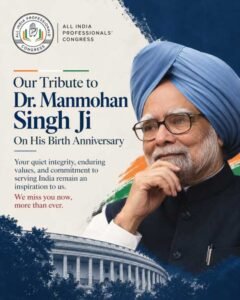
On Dr. Manmohan Singh’s 94th birth anniversary, the announcement placed the Fellowship’s next phase around a central objective: creating a wider pathway for professionals and intellectuals to engage with politics, policymaking, nation-building and public service.

RELATED NEWS
- Advertisment -spot_img

LATEST NEWS