
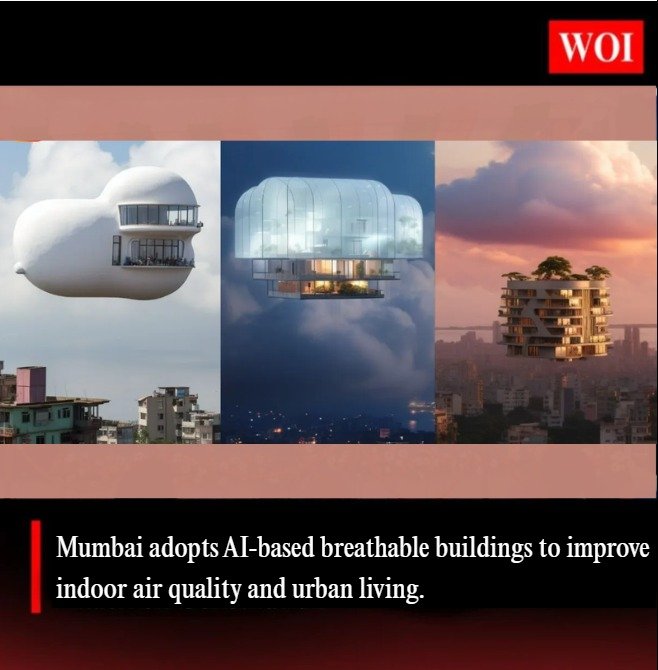
Mumbai’s real estate sector is witnessing a major transformation with the introduction of AI-powered “breathable buildings,” shifting focus from smart features to health-centric infrastructure. A new pilot project aims to integrate advanced air purification systems into large developments, placing indoor air quality at the centre of urban living.
These buildings use artificial intelligence and real-time environmental sensors to continuously monitor indoor and outdoor air conditions. The system automatically adjusts airflow and filtration to reduce harmful pollutants, including ultrafine particles, toxic gases, and microbes. Unlike traditional systems, this approach is proactive, ensuring consistently safer air quality.
The concept marks a shift from “smart homes” to “healthy buildings,” where well-being becomes a core design priority. With studies showing that people spend nearly 90% of their time indoors, maintaining clean air inside homes and offices is becoming increasingly important.
Air quality is now emerging as a key factor in real estate decisions, especially in densely populated cities facing pollution challenges. Clean indoor environments could soon influence property demand as much as location and amenities.
If successful, the Mumbai model may be expanded to other major cities, setting a new benchmark for future urban development where technology and health go hand in hand.
