
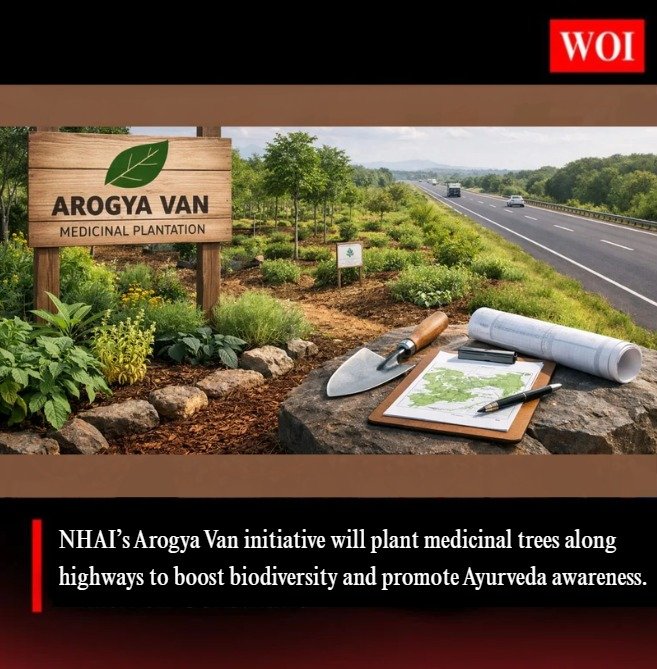
The National Highways Authority of India (NHAI) has introduced the ‘Arogya Van’ initiative, aiming to transform India’s highways into green corridors lined with medicinal trees. The project seeks to enhance biodiversity, promote sustainability, and raise awareness about traditional healing systems such as Ayurveda.
Under the first phase, NHAI plans to plant over 67,000 medicinal trees across 17 locations covering nearly 62.8 hectares in states including Madhya Pradesh, Gujarat, Tamil Nadu, and Maharashtra. Around 36 carefully selected species—such as neem, amla, jamun, tamarind, gular, and maulsari—will be planted based on their ecological suitability and medicinal value.
The initiative focuses on high-visibility and high-impact areas like toll plazas, interchanges, and wayside amenities. This strategic placement not only improves roadside greenery but also helps educate travelers about India’s rich medicinal plant heritage.
Beyond aesthetics, Arogya Van emphasises functional biodiversity. These plantations are expected to support pollinators, provide habitats for birds and small animals, and improve soil health. By doing so, the initiative strengthens ecosystem resilience and redefines highways as ecological lifelines rather than just transport routes.
Overall, the Arogya Van initiative reflects a progressive step towards integrating infrastructure development with environmental conservation and traditional knowledge systems.
