
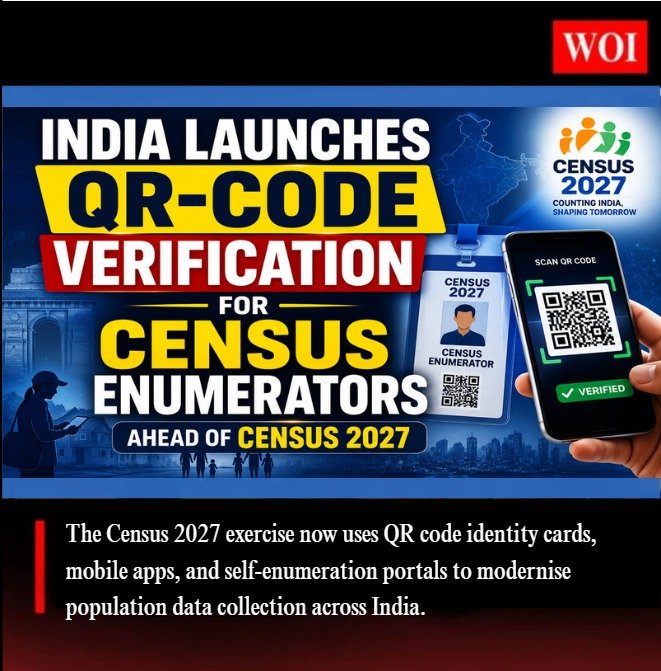
India has introduced QR code-enabled identity cards for Census enumerators as part of the digital Census 2027 exercise. The initiative allows residents to verify the authenticity of Census staff by scanning the QR code on their identity cards through mobile devices, improving transparency and security during data collection.
The first phase of the Census began on 1 April 2026 and will continue until 30 September 2026. Nearly 30 lakh enumerators are participating in the nationwide exercise, which is being conducted through mobile applications and a centralised digital portal for real-time data management.
The government has also launched the Census of India Self-Enumeration Portal, enabling citizens to submit their details online without waiting for field visits. In areas such as Noida and Ghaziabad, the self-enumeration process remained open from 7 May to 21 May 2026. Residents received QR codes that generated unique self-enumeration IDs for verification purposes.
The QR-based identity verification system has been especially useful in gated communities and residential societies, where residents can quickly confirm the credentials of Census officials. The digital framework also supports live monitoring, faster data transmission, and reduced chances of manual errors.
India’s Census is conducted under the Census Act, 1948, and is a Union subject under the Constitution. Traditionally, the Census is carried out in two phases — house listing and population enumeration. The use of digital tools in Census 2027 marks a major step toward modernising India’s population data collection system.
