
By Shashank Pasupuleti
Hyderabad, April 18, 2026:
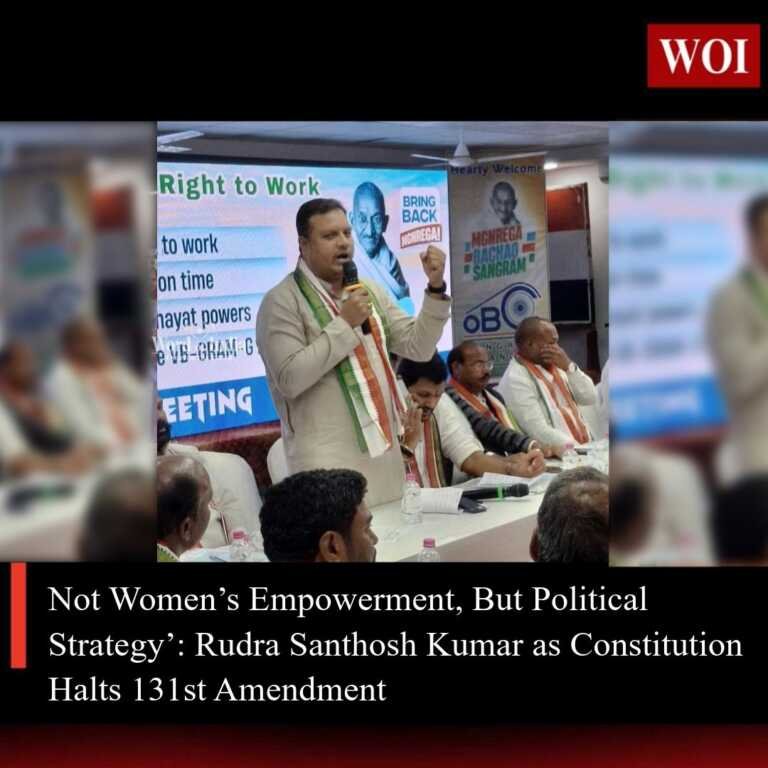
In a sharp reaction to the defeat of the in the Lok Sabha, Telangana Pradesh Congress Committee (TPCC) General Secretary described the outcome as a “victory for the Constitution and federal democracy,” alleging that the Centre attempted to push through a politically driven restructuring of India’s electoral framework.
The Congress leader, who also serves as National Coordinator of the OBC Department in the All India Congress Committee (AICC), argued that the proposed amendment was not a standalone reform but a bundled legislative exercise aimed at altering the political balance under the cover of women’s reservation.
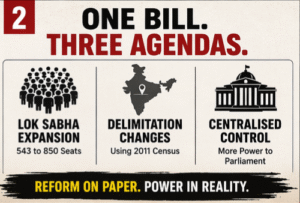
 Three Agendas, One Narrative
According to him, the bill effectively combined three major structural changes — expansion of Lok Sabha seats, alteration of delimitation rules, and extension of these changes to Union Territories — under a single narrative of women’s empowerment.
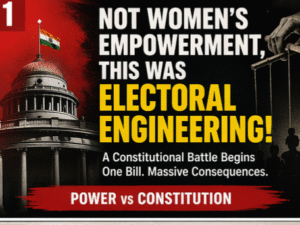
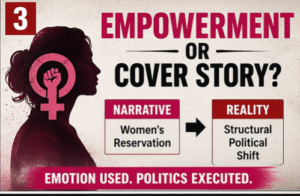
“This was not about empowering women. It was about expanding seats, manipulating delimitation, and centralizing power — all packaged in a way that any opposition could be branded anti-women,” he said.
He further pointed out that the **** already provides for women’s reservation and can be implemented independently.
“Bring the 2023 law for implementation today — we will support it without hesitation. But it should not be used as a cover for electoral manipulation,” he added.
Federal Balance Under Strain
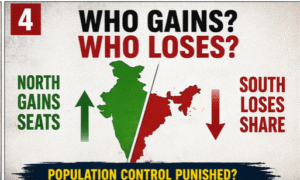
The TPCC leader flagged concerns over the proposed use of 2011 Census data for delimitation, warning that it would disproportionately benefit northern states while reducing the relative share of southern states in Parliament.
“States like Telangana, Andhra Pradesh, Tamil Nadu and Kerala adhered to national policy and controlled population growth. Reducing their representation now is a betrayal of that constitutional understanding,” he observed.
Concerns Over Constitutional Safeguards
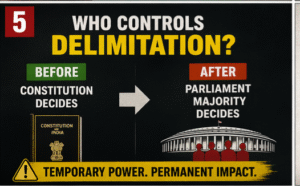
He also raised objections to provisions allowing Parliament to determine delimitation timelines through a simple majority, calling it a departure from established constitutional principles.
“The Constitution mandates delimitation based on census data. Shifting that power to a simple majority in Parliament sets a dangerous precedent and weakens institutional safeguards,” he stated.
OBC Representation Missing
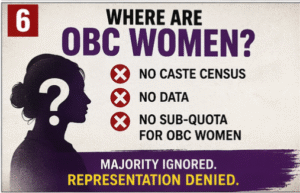
Highlighting the absence of provisions for Other Backward Classes (OBCs), he noted that a significant section of the population remains unaccounted for in the proposed framework.
“With no caste census, no updated data, and no sub-quota for OBC women, this cannot be called inclusive representation. It risks benefiting only a limited section,” he said, reiterating the demand for a comprehensive caste census before any delimitation exercise.
Questions Over Timing
The timing of the bill’s introduction during elections in key states also drew criticism.
“The sequence of events suggests a deliberate attempt to create a narrative battle and politically corner the opposition. This was strategy, not reform,” he remarked.
Decisive Outcome in Lok Sabha
Referring to the voting pattern, he termed the defeat decisive, noting that the government failed to secure the constitutionally mandated two-thirds majority.
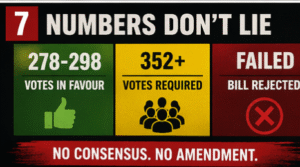
“This was not a marginal setback. The absence of consensus was clear, and the constitutional framework held firm,” he said.
The Way Forward
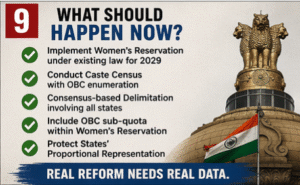
Outlining the path ahead, he called for:

– Immediate implementation of women’s reservation under existing law for the 2029 elections
– Completion of a caste census with OBC enumeration
– A consensus-driven delimitation process involving all states
– Inclusion of OBC sub-quotas within women’s reservation
– Protection of states’ proportional representation
A Victory for Democratic Principles”
Concluding, he emphasized that the development should be seen beyond party lines.
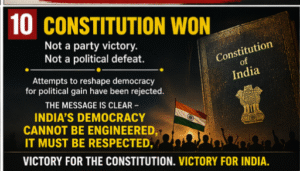
“This is not about political victory or defeat. It is about preserving the integrity of the Constitution. Any attempt to reshape democracy for short-term political gain must be resisted,” he said.
