
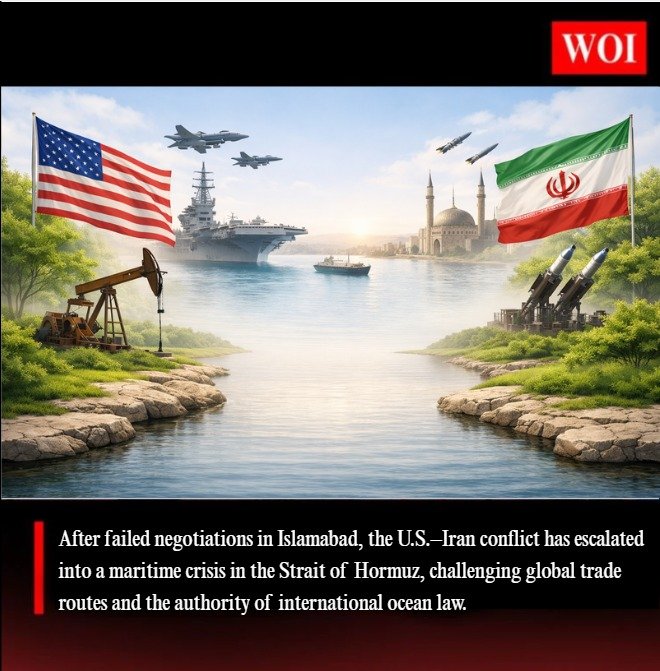
As of April 15, 2026, the Strait of Hormuz—one of the world’s most vital maritime chokepoints—has become the epicenter of a dangerous legal and military confrontation following the collapse of U.S.–Iran talks in Islamabad. Iran’s decision to impose a multimillion-dollar “security toll” on commercial vessels and the U.S. response threatening a naval blockade have pushed global trade and energy security into uncharted waters.
At the heart of the crisis lies a sharp legal dispute over the United Nations Convention on the Law of the Sea (UNCLOS), often called the “Constitution of the Oceans.” The United States argues that the Strait qualifies as an international strait, guaranteeing Transit Passage—free, uninterrupted movement without tolls. Iran counters that, as a non-ratifying state, it recognizes only Innocent Passage, claiming the right to inspect ships and charge fees for security amid heightened conflict.
The irony is stark: neither Washington nor Tehran is a full party to UNCLOS, yet both selectively invoke its provisions to justify their actions. With oil prices surging and naval forces mobilizing, the standoff highlights a sobering reality—when major powers refuse binding legal commitments, international maritime law weakens. In the Strait of Hormuz today, control is less about treaties and more about force, underscoring how fragile the rules-based order becomes when diplomacy collapses.
