
By Soniya:
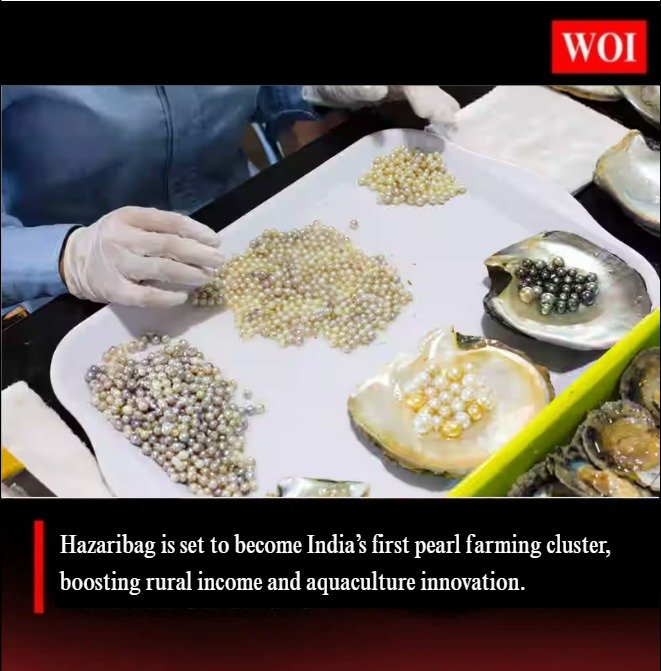
Hazaribag district in Jharkhand is emerging as India’s first pearl farming cluster, marking a significant step in promoting high-value aquaculture and rural livelihoods. Supported by government initiatives, the project aims to develop a sustainable and scalable model for scientific pearl cultivation while boosting employment opportunities in the region.
The initiative focuses on expanding pearl farming through modern techniques, training programs, and improved market linkages. Authorities are working on a phased development plan to bring more farmers into the sector and enhance productivity. The region’s favourable water resources and growing technical support have positioned Hazaribag as a potential national hub for pearl production.
A key highlight of the project is the strong emphasis on women’s participation. Self-help groups (SHGs) are being trained in pearl farming practices, and plans are underway to establish women-led Farmer Producer Organizations (FPOs). This approach is expected to promote financial independence, strengthen rural entrepreneurship, and ensure inclusive growth.
The project also integrates pearl farming with cage fish culture at the Tilaiya Reservoir, allowing farmers to diversify income sources and maximise resource utilisation. By combining innovation with traditional livelihoods, the initiative enhances both productivity and resilience.
Pearl farming is gaining importance as a low-investment, high-return activity with strong market demand. As Hazaribag develops into a model cluster, it is expected to contribute to rural development, export potential, and sustainable use of aquatic resources in India.
