
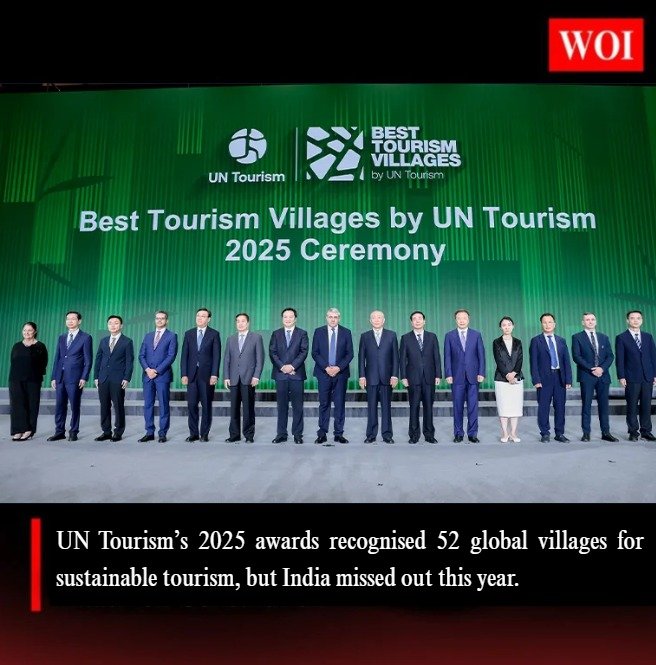
The United Nations Tourism (UN Tourism) has announced the winners of its fifth annual “Best Tourism Villages” awards, celebrating 52 rural destinations from around the world for their excellence in sustainability, innovation, and cultural preservation. The results, unveiled in Huzhou City, China, recognised villages from 65 member states, though no Indian village made the 2025 list.
Honouring Rural Innovation and Sustainability
The “Best Tourism Villages 2025” awards spotlight communities that successfully balance heritage preservation, environmental responsibility, and local development. Out of 270 applications, 52 villages were honoured, while 20 more joined the Upgrade Programme, bringing the total to 72 new entrants this year. The Best Tourism Villages Network now includes 319 destinations globally, making it the world’s largest platform for rural tourism excellence.
Selection Criteria and Objectives
Launched in 2021 under the UN Tourism for Rural Development Programme, the initiative assesses candidates on nine key parameters—including sustainability, cultural integrity, governance, infrastructure, and social inclusion. The programme’s three pillars—Recognition, Upgrade, and Network—work together to share best practices, promote knowledge exchange, and empower rural communities through responsible tourism.
Highlights from 2025 Winners
This year’s winners span continents, featuring destinations like Bled (Slovenia), Pemuteran (Indonesia), Muju Village (Republic of Korea), Koyasan (Japan), and Ezcaray (Spain). New entrants in the Upgrade Programme—including Dawa Village (China), Quintandona (Portugal), and Brihuega (Spain)—will receive UN mentorship to meet global recognition standards in coming years.
Exam-Oriented Facts
- Total winners (2025): 52 villages
- Event location: Huzhou City, China
- Network size: 319 destinations across 65 member states
- Indian villages previously honoured: Pochampalli (2021) and Dhordo (2023)
India’s Absence and Future Path
Although India was not represented this year, experts note that improving sustainability documentation, governance models, and local tourism planning could enhance future entries. India’s earlier honourees—Pochampalli (Telangana) and Dhordo (Gujarat)—remain global examples of craft-based and desert tourism excellence. With the next round of applications opening in early 2026, India’s rural tourism sector has a renewed opportunity to showcase its heritage-rich villages on the global stage.
