
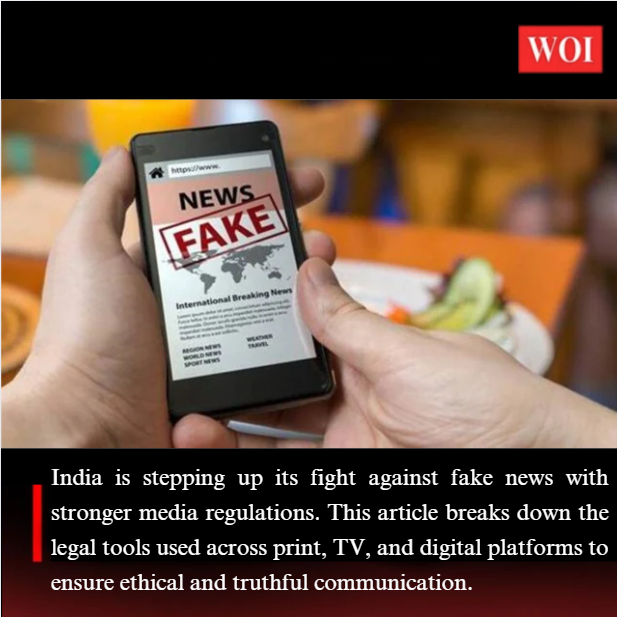
The Government of India has reinforced its legal measures to curb the spread of fake news and misinformation across print, television, and digital platforms, aiming to safeguard public order, national security, and information integrity.
Print Media Regulation
Print media is governed by the Press Council of India (PCI), which enforces ethical journalism through the Norms of Journalistic Conduct. Under Section 14 of the Press Council Act, the PCI can censure or warn publications that spread fake or misleading content.
TV Media Oversight
Television content is regulated by the Cable Television Networks Act, 1995. The Programme Code prohibits false, obscene, or defamatory broadcasts. A three-tier grievance redressal system, introduced in 2021, addresses complaints and ensures accountability among broadcasters.
Digital Media and IT Rules, 2021
Digital news and OTT platforms must comply with the Information Technology (Intermediary Guidelines and Digital Media Ethics Code) Rules, 2021. These rules mandate fact-checking, content responsibility, and user safety. The PIB Fact Check Unit counters fake news related to the central government.
OTT Platform Regulation
OTT platforms must follow content classification guidelines and restrict age-inappropriate material. In 2025, the government issued strict advisories to ensure compliance, resulting in the blocking of 43 OTT platforms for violations.
Legal Authority to Block Content
Under Section 69A of the IT Act, 2000, the government can block online content that threatens sovereignty or public order. Section 79(3)(b) further obliges digital intermediaries to remove unlawful content upon notification.
India’s multi-tiered legal framework ensures responsible media practices and helps combat the growing threat of misinformation in the digital age.
