
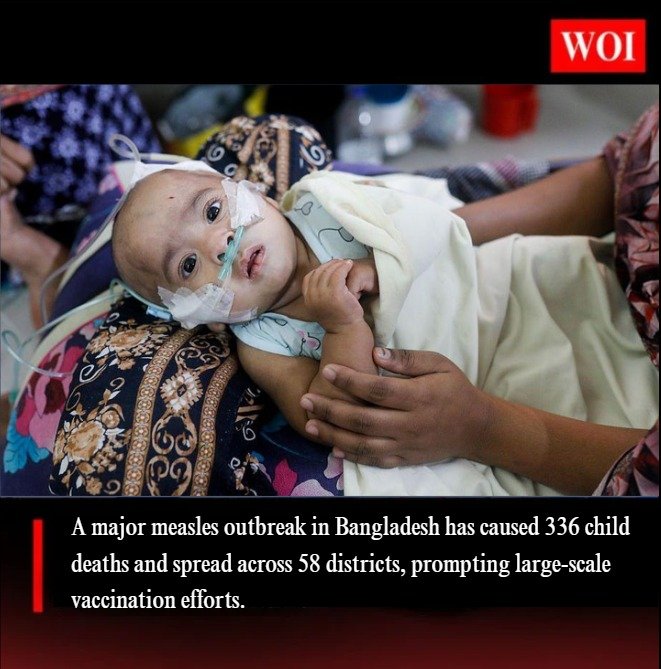
Bangladesh is facing a severe measles outbreak that has resulted in 336 child deaths since 15 March 2026. According to health authorities, more than 50,000 confirmed and suspected measles cases were reported by 8 May 2026, affecting 58 out of the country’s 64 districts across all eight divisions.
Measles is a highly contagious viral disease caused by the measles virus from the Paramyxoviridae family. It spreads through respiratory droplets and mainly affects children in areas with low vaccination coverage. Most of the reported infections in Bangladesh have been among children aged 1 to 14 years.
Between 15 March and 14 April 2026, Bangladesh recorded over 19,000 suspected cases and nearly 2,900 laboratory-confirmed cases. During the same period, 166 measles-related deaths were reported, with children under five accounting for nearly 79% of the fatalities. The outbreak worsened further in May, with 17 child deaths recorded in a single day on 4 May and another 12 deaths reported within 24 hours on 8 May.
To control the outbreak, Bangladesh launched a nationwide measles-rubella (MR) vaccination campaign on 5 April 2026. By early May, around 17 million children had received vaccines, and authorities planned to secure additional doses to expand coverage. However, vaccine shortages and disruptions in procurement during 2024–25 weakened routine immunisation and increased the number of vulnerable children.
The outbreak has also exposed challenges in healthcare infrastructure, including shortages of testing kits and delays in laboratory confirmation of cases. Health experts stress that strengthening vaccination coverage and disease surveillance is essential to controlling the spread of measles and preventing further child deaths.
