
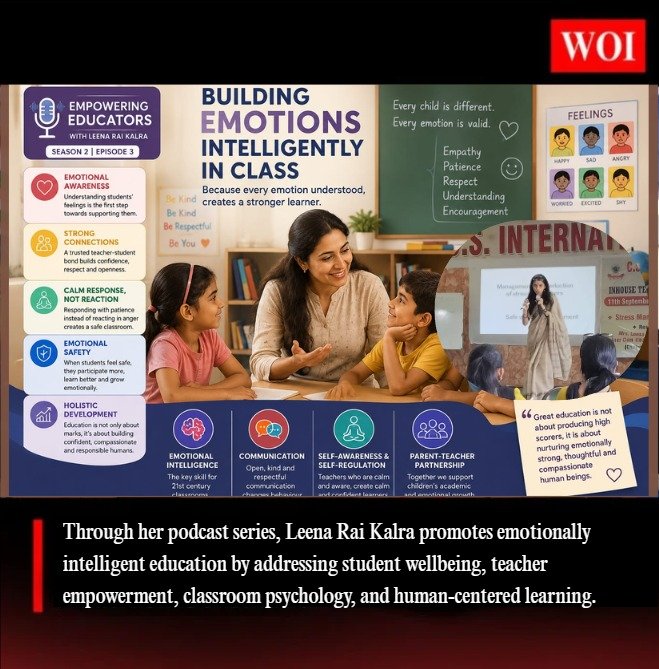
From Classrooms to Consciousness: How Leena Rai Kalra is Redefining Modern Education Through Emotional Intelligence
At a time when schools across the world are struggling with rising student stress, emotional imbalance, classroom pressure, behavioral challenges, and communication gaps between teachers, students, and parents, educator and podcast host Leena Rai Kalra is attempting to bring education back to its most human form — emotionally aware, compassionate, balanced, and deeply connected. Through her educational podcast series Empowering Educators with Leena Rai Kalra, produced under Learning Solution, Leena Rai Kalra is not merely discussing teaching techniques or academic excellence. Instead, she is opening conversations around the emotional realities hidden inside classrooms — realities that often remain unnoticed behind report cards, ranks, discipline systems, and academic competition.
Her journey through Season 1 and the ongoing Season 2 has slowly evolved into a larger educational movement focused on emotional intelligence, teacher empowerment, child psychology, and holistic development.
A Classroom is More Than Four Walls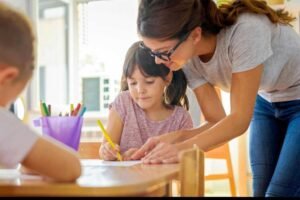 One of the strongest messages repeatedly emerging from the podcast is that a classroom is not simply a place where lessons are taught. According to Leena Rai Kalra, classrooms are emotional ecosystems where confidence is built, fears are hidden, personalities are shaped, and emotional wounds can either deepen or heal depending on how educators respond.
In several episodes, she reflects on a reality familiar to almost every teacher: a child who appears silent one day may suddenly become disruptive the next; a student who performs well academically may still be emotionally insecure; another child may misbehave not because of indiscipline, but because of emotional distress, lack of attention, pressure at home, or fear of failure.
Rather than viewing such students as “problematic,” Leena Rai Kalra encourages educators to understand the emotional causes behind behavioral changes.
According to her, reacting with anger, humiliation, or labeling can permanently damage a student’s confidence. Instead, she advocates patience, observation, calm communication, and emotional maturity from teachers.
This philosophy became especially visible in her latest Season 2 episode, “Building Emotions Intelligently in Class,” where she described emotional intelligence as one of the most essential tools modern educators must possess.
Season 1: Building the Foundation of Human-Centered Education When Season 1 of the podcast began, the discussions focused heavily on redefining the role of teachers in modern society.
Leena Rai Kalra repeatedly challenged the traditional idea that teachers are only academic instructors. Instead, she described educators as emotional architects who influence not just grades, but also:
confidence,
self-esteem,
communication,
discipline,
motivation,
and emotional security.
The season explored practical realities of school life: students struggling silently, children afraid of failure, teachers handling emotional pressure, and parents expecting constant academic perfection.
One of the major highlights was her emphasis on encouragement.
She explained that every child learns differently and carries different emotional capacities. Some students respond quickly, while others need time, patience, reassurance, and repeated support.
The podcast stressed that small words of appreciation from teachers can transform student confidence, while criticism, comparison, or public humiliation can emotionally isolate children.
Throughout Season 1, Leena Rai Kalra consistently reinforced one message: education cannot become meaningful if emotional wellbeing is ignored.
Parent-Teacher Relationships: The Silent Influence on Every Child
Another important dimension explored in the series was the relationship between schools and parents.
The podcast discussed how many students today carry emotional pressure not only from academic expectations but also from constant comparisons and communication gaps between adults around them.
Leena Rai Kalra observed that when parents and teachers fail to work together constructively, children often become emotionally confused and mentally burdened.
Her episodes encouraged:
respectful parent-teacher communication,
emotional listening,
collaborative guidance,
and supportive home environments.
She explained that education becomes stronger when schools and families work as partners instead of functioning through blame, pressure, or unrealistic expectations.
Discipline Without Fear
One of the most discussed aspects of the podcast has been its approach toward classroom discipline.
Rather than promoting strict fear-based systems, Leena Rai Kalra advocates emotionally intelligent discipline based on respect, understanding, and trust.
According to her, many behavioral problems in classrooms are emotional reactions rather than intentional misconduct.
The series explains that:
students may become disruptive due to emotional insecurity,
attention-seeking behavior may reflect loneliness,
silence may indicate fear,
aggression may emerge from stress or rejection.
In this context, she advises educators to control their own emotional reactions first before responding to students.
The podcast repeatedly states that emotionally reactive teachers unintentionally create fearful classrooms, while emotionally balanced educators create emotionally secure learners.
Season 2: Enter Emotional Intelligence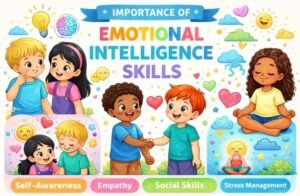 While Season 1 established the foundation, Season 2 moved deeper into emotional intelligence and psychological awareness in education.
The newer season recognizes the changing realities of modern schools:
increasing student anxiety,
social media pressure,
emotional isolation,
teacher burnout,
rising parental expectations,
and mental health concerns among children.
Leena Rai Kalra openly acknowledges that teachers themselves are under emotional strain. From classroom management to administrative responsibilities and parent interactions, educators often carry invisible emotional exhaustion.
This led to another important discussion in Season 2 — teacher emotional wellbeing.
According to the podcast, emotionally exhausted teachers struggle to create emotionally balanced classrooms. Therefore, teachers must also learn self-awareness, emotional regulation, and mental balance.
The podcast encourages educators to avoid carrying stress into classrooms and instead develop calmness, patience, and solution-oriented communication.
“Building Emotions Intelligently in Class” Resonates Deeply
The latest episode of the series appears to have captured the emotional core of the entire podcast.
In the episode, Leena Rai Kalra speaks directly about how emotions influence every aspect of learning.
She explains that teaching is not about controlling students through authority alone. It is about understanding human behavior, observing emotional patterns, and responding with wisdom instead of impulsive reactions.
Her statement that “classrooms are spaces of emotional growth” has resonated strongly with listeners who believe education today must move beyond marks, competition, and rigid systems.
The episode highlights:
emotional awareness,
empathy,
communication,
emotional regulation,
balanced responses,
and psycho-emotional connection between teachers and students.
More importantly, it emphasizes that emotional intelligence is no longer optional in education — it is becoming essential.
A Larger Educational Message
Across both seasons, the podcast slowly builds a larger educational philosophy that challenges purely marks-oriented systems.
Instead of measuring success only through academic performance, the series advocates nurturing:
emotionally strong individuals,
compassionate human beings,
confident communicators,
respectful students,
and mentally resilient learners.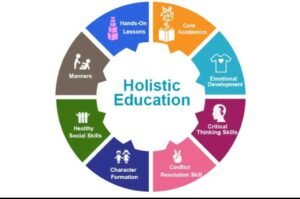 The podcast repeatedly reminds listeners that behind every classroom exists a world of emotions often unseen by society.
A child struggling academically may simply need encouragement. A disruptive student may actually be emotionally unheard. A teacher losing patience may be emotionally exhausted. A parent pushing too hard may unknowingly create anxiety.
By bringing these hidden emotional realities into public educational discussions, Leena Rai Kalra is gradually shaping a conversation that extends far beyond schools.
Her podcast is becoming not just an educational series, but a reflection on how future generations should be taught, guided, understood, and emotionally supported.
And at the center of that message lies one powerful belief:
> Education is not only about creating intelligent minds — it is about nurturing emotionally balanced human beings capable of compassion, confidence, resilience, and humanity.
