
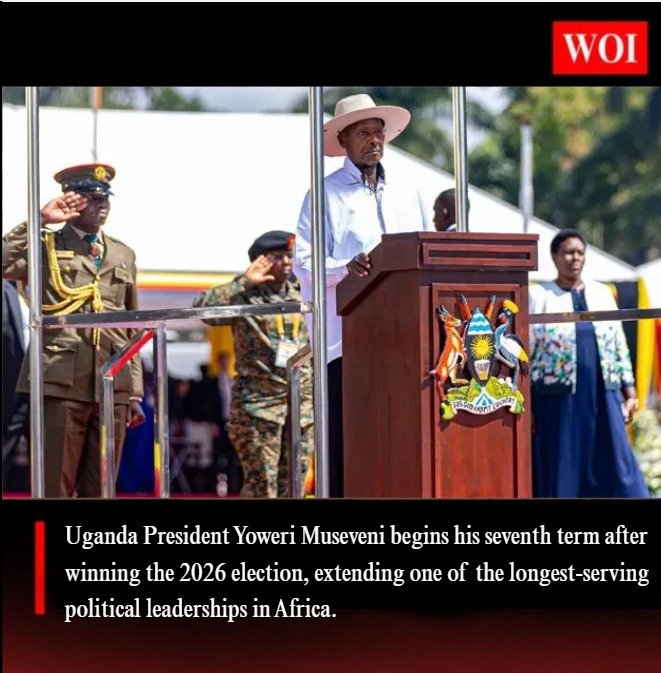
Ugandan President Yoweri Museveni has officially been sworn in for a seventh term, extending one of the longest political reigns in modern African history. The 81-year-old leader secured victory in Uganda’s January 2026 presidential election, continuing a rule that began in 1986.
The swearing-in ceremony was held in the capital city of Kampala in the presence of government officials, foreign dignitaries, and thousands of supporters. Museveni’s latest term means he has now remained in power for nearly four decades, making him one of Africa’s longest-serving heads of state.
According to Uganda’s Electoral Commission, Museveni won approximately 71.65% of the vote in the 2026 presidential election. Opposition leader Bobi Wine emerged as his main challenger, securing around 24.72% of the votes.
Museveni first came to power after leading a rebel movement that overthrew the previous government in 1986. Over the years, his supporters have credited him with stabilizing Uganda after years of political instability, improving infrastructure, driving economic reforms, and strengthening regional security.
However, his long tenure has also faced criticism from opposition groups and international observers. Critics argue that constitutional changes during his presidency weakened democratic checks and concentrated political power.
Two major constitutional amendments played a key role in extending Museveni’s presidency. Uganda removed presidential term limits, allowing unlimited re-election, and later scrapped the presidential age limit, enabling Museveni to continue contesting elections despite his age.
The latest oath ceremony once again highlights the broader debate across Africa regarding long-serving leaders, democratic reforms, political continuity, and the balance between stability and institutional democracy.
