
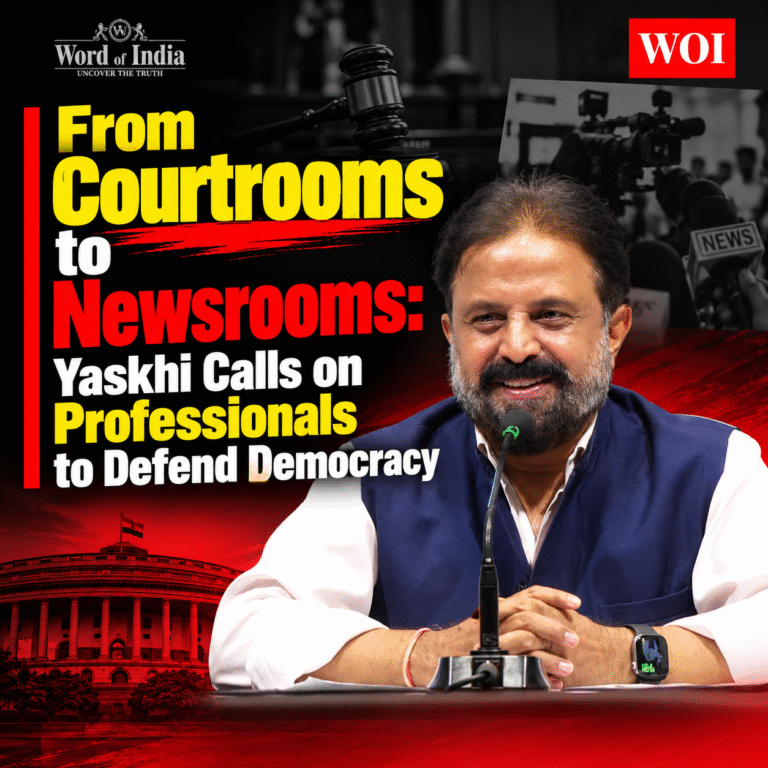
At his first Telangana press meet after taking charge as AIPC National Chairman, Yaskhi calls on professionals to strengthen democracy and constitutional rights.
100 assistance centres proposed in 100 days; professional networks, fellowships and a national ideas convention on the agenda
HYDERABAD Oct 18 :
Lawyers, journalists, doctors and professionals must play a greater role in protecting constitutional rights, strengthening democracy and addressing public grievances, All India Professionals’ Congress (AIPC) National Chairman and former MP Madhu Goud Yaskhi said at Gandhi Bhavan in Hyderabad.
Addressing his first Telangana press conference after assuming charge, Yaskhi outlined plans to connect professional expertise with public service, grassroots organisation and government accountability.
He said professionals should contribute beyond their regular occupations by helping vulnerable communities, examining government policies and proposing practical solutions.
 Lawyers and Journalists at the Forefront
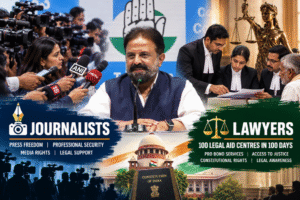 Lawyers and Journalists at the Forefront
Yaskhi discussed a proposal to establish 100 assistance centres within 100 days, with legal aid and healthcare outreach among the priorities.
He called upon senior advocates to mentor younger lawyers and provide free legal guidance to citizens unable to afford representation. Constitutional awareness and protection of civil liberties would be central to the initiative.
Turning to journalists, he highlighted concerns over press freedom, financial insecurity, professional pressures and legal challenges.
He advocated greater cooperation between lawyers and media professionals, while encouraging journalists, former editors and media researchers to participate in AIPC’s public-policy and democratic-accountability initiatives.
Rahul Gandhi’s Vision and Personal Sacrifices
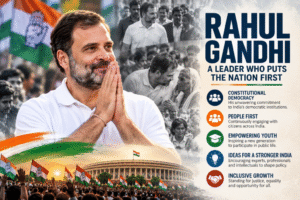
Yaskhi praised Rahul Gandhi’s commitment to public service and constitutional democracy, referring to the personal sacrifices associated with his political journey.
He recalled AIPC’s establishment in 2017 under Gandhi’s initiative and acknowledged Shashi Tharoor’s contribution as its first Chairman.
He also remembered the sacrifices of former Prime Ministers Indira Gandhi and Rajiv Gandhi, emphasising the responsibility of political leaders to protect India’s democratic foundations.
Voter-Roll Allegations and the Right to Protest
Raising concerns over the Special Intensive Revision (SIR) of electoral rolls, Yaskhi alleged that 13 crore voter records had been deleted, claiming that marginalised communities, including Dalits, Adivasis and minorities, were particularly affected.
The allegation is disputed and does not establish that 13 crore eligible voters were unlawfully removed.
He argued that safeguarding voting rights was a constitutional responsibility extending beyond party politics.
Yaskhi also criticised restrictions on peaceful demonstrations, referring to Jantar Mantar in New Delhi, which was removed from the list of designated protest venues, and Dharna Chowk in Hyderabad.
He alleged excessive police action against protesters and criticised the treatment of senior Congress leaders, including Mallikarjun Kharge, Rahul Gandhi and Priyanka Gandhi Vadra.
He maintained that democratic dissent must remain possible within the framework of public order and constitutional protections.
Telangana Administration Under Scrutiny
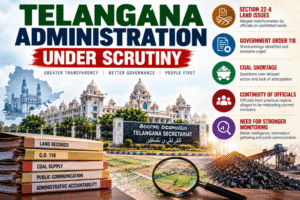 Telangana Administration Under Scrutiny
Yaskhi also questioned aspects of Telangana’s administrative functioning.
He alleged that certain officials had misled the government and Revenue Minister Ponguleti Srinivasa Reddy over Section 22-A land restrictions.
Referring to Government Order 118, he said administrative shortcomings had been identified and brought to the government’s attention.
He also questioned delays in anticipating coal shortages and called for stronger departmental monitoring, intelligence gathering and public communication.
His criticism extended to officials who had served under the previous BRS administration, some of whom he alleged were providing misleading advice to current ministers.
Shadow Ministry and Policy Lab Proposed
To improve accountability, Yaskhi proposed a shadow-ministry-style research mechanism through which professionals could independently examine government departments.
Doctors, economists, educationists, lawyers and other specialists could evaluate policies, budget allocations and implementation outcomes.
A proposed Policy Lab would study issues including MSME credit, delayed payments, economic inequality, privatisation and public expenditure.
Referring to Articles 39(b) and 39(c) of the Constitution, he stressed the importance of equitable distribution of resources.
He also criticised what he described as corporate favouritism under the BJP-led Union government and raised concerns over India’s handling of China-related security questions and aspects of US relations.
Rural Healthcare Through Professional Networks
Drawing on the experience of his wife, Dr. Shuchee Yaskhi, an endocrinologist, Yaskhi recalled diabetes screening and retinal examination initiatives in rural Nizamabad.
He proposed connecting rural doctors with specialists in urban hospitals to improve access to advanced medical advice.
He also called for examining the effectiveness of Ayushman Bharat and Telangana’s Aarogyasri scheme, particularly whether intended beneficiaries were receiving timely treatment.
The proposed assistance centres would seek to bring professional services closer to underserved communities.
 Women’s Reservation and Southern States’ Concerns
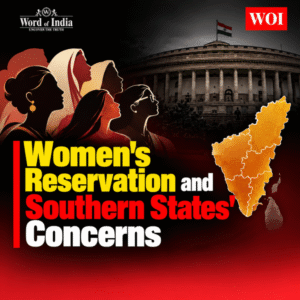 Women’s Reservation and Southern States’ Concerns
Yaskhi supported 33 per cent reservation for women in legislatures but cautioned against population-based delimitation measures that could reduce the relative parliamentary representation of southern States.
Referring to Telangana Chief Minister A. Revanth Reddy’s position, he called for constitutional and policy alternatives that would advance women’s representation while protecting regional fairness.
Fellowships, Intellectuals and Young Professionals
Discussing the Dr Manmohan Singh Fellowship, Yaskhi referred to an earlier group of approximately 50 participants and plans involving 100 participants in the next phase, with more than 800 applications reportedly received.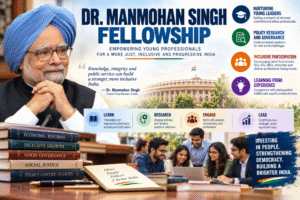
He emphasised opportunities for women, SCs, STs, Backward Classes, minorities and young professionals.
He also mentioned intellectuals including Justice Sudarshan Reddy, Professor Kancha Ilaiah and Shantha Sinha, and recalled the contribution of experts to India’s Green Revolution and telecommunications development under Rajiv Gandhi and Sam Pitroda.
International economic research and Track-II diplomacy were also identified as areas where specialists could contribute.
Telangana to Lead National Expansion

Yaskhi proposed strengthening AIPC’s presence through professional committees in 100 urban districts, with outreach extending to approximately 150 parliamentary constituencies.
He discussed an organisational growth objective of around 15,000 participants from a stated base of approximately 3,000, though the precise membership categories remain to be clarified.
Telangana, he said, could become a model for expanding professional networks nationwide.
He also proposed a two-day national Ideas Convention in Hyderabad around AIPC’s tenth anniversary, bringing together experts to discuss governance, economic development, social justice and democratic institutions.
Defend, Serve and Propose
Summarising AIPC’s priorities, Yaskhi outlined three objectives: Defend constitutional rights, Serve communities through professional expertise and Propose evidence-based policy solutions.
His remarks linked the organisation’s political role with practical services, independent research and wider public participation.
Yaskhi has laid out an ambitious roadmap to bring professionals into public life. With his leadership journey at AIPC just beginning, the coming months will reveal how this vision takes shape across India.
