
By Special Correspondent
MSME Amendment Bill Welcome, but Credit, Delayed Payments and Pending Schemes Need Urgent Action: Shashank Pasupuleti
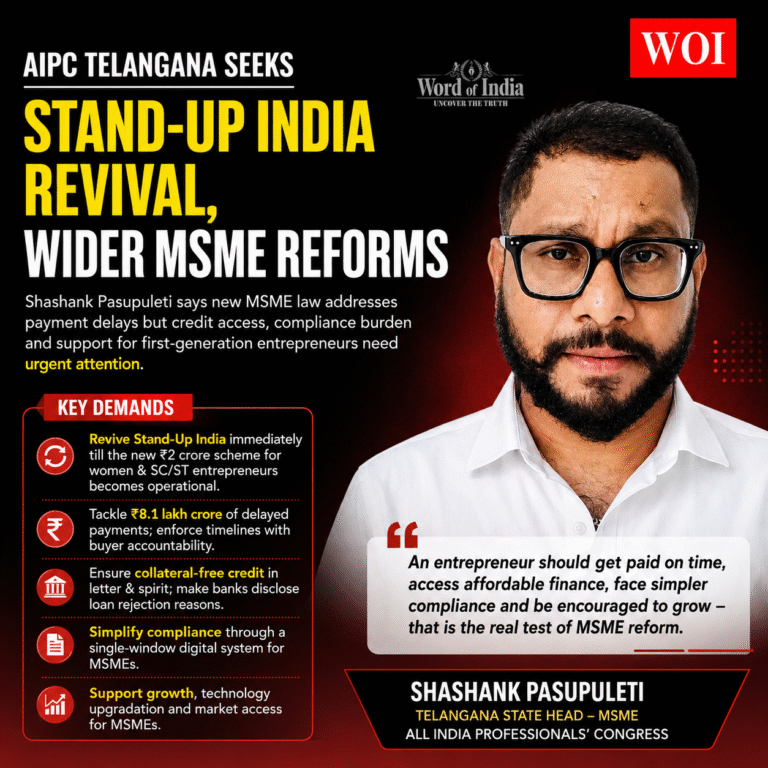
HYDERABAD, Aug 8: The Micro, Small and Medium Enterprises Development (Amendment) Bill, 2026 is a positive step towards addressing delayed payments and improving dispute resolution, but the Centre must go beyond legislative changes and address the larger problems of credit access, collateral demands, compliance burden and stalled support schemes, Shashank Pasupuleti, Telangana State Head of the MSME vertical of the All India Professionals’ Congress, said.
In a statement, Pasupuleti said the amended law could help MSMEs through faster settlement of dues, tighter timelines for mediation and arbitration and wider use of the Trade Receivables Discounting System, or TReDS.
However, he said the more serious test would be implementation.
 “An MSME does not benefit merely because a timeline is written into a law. The benefit comes only when the entrepreneur actually receives the money within that timeline,” Pasupuleti said.
He pointed to the Parliamentary Standing Committee on Industry’s March 2026 findings, which cited an Economic Survey estimate of about ₹8.1 lakh crore locked in delayed payments to MSMEs. The committee also said the MSME Samadhaan portal had recorded more than 2.56 lakh applications involving claims of over ₹55,000 crore, while the Online Dispute Resolution mechanism had disposed of only 17 cases in its first eight months.
Pasupuleti said the figures showed that the problem was not merely the absence of laws, but inadequate enforcement capacity.
“The government must strengthen Facilitation Councils, make buyers accountable and publish data on how much money is actually recovered for MSMEs, not merely how many cases are registered or disposed of,” he said.
Credit access remains major concern
Pasupuleti said access to affordable formal finance continued to be one of the biggest difficulties faced by small businesses.
The Parliamentary Standing Committee itself flagged a gap between the intent of collateral-free lending and what entrepreneurs encounter at bank branches. It noted complaints of collateral being sought, heavy dependence on CIBIL scores and additional borrowing costs through fees and insurance.
“First-generation entrepreneurs cannot be judged only on the basis of an established credit history. If a person is starting a business for the first time, the banking system must also look at cash flow, orders, business viability and repayment capacity,” Pasupuleti said.
He called for greater branch-level accountability under CGTMSE and publication of reasons for rejection of MSME loan applications.
‘Bring back Stand-Up India until replacement is ready’
Pasupuleti also asked the Centre to revive Stand-Up India as an interim measure until the new scheme announced in the 2025-26 Union Budget becomes fully operational.
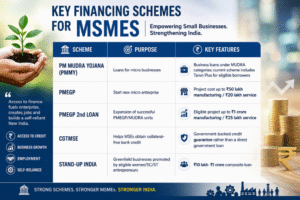
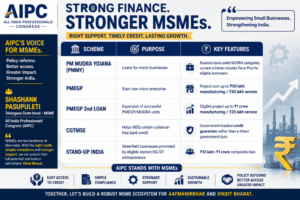
Official records show that Stand-Up India was operational only up to March 31, 2025. The scheme had provided bank loans of ₹10 lakh to ₹1 crore to SC/ST and women entrepreneurs for setting up greenfield enterprises. As of March 31, 2025, around 2.75 lakh loans worth approximately ₹62,790 crore had been sanctioned under the programme.
The Union Budget 2025-26 announced a replacement scheme for five lakh women and SC/ST first-time entrepreneurs, proposing term loans of up to ₹2 crore over five years and stating that it would incorporate lessons from Stand-Up India.
However, the Department of Financial Services said as recently as February 2026 that the Expenditure Finance Committee note for the new scheme was still under preparation. Separately, the Parliamentary Standing Committee reported in March that the programme remained unimplemented nearly a year after its announcement.
“This is precisely the gap that needs to be corrected. Stand-Up India ended in March 2025, while the new scheme announced to replace it had still not become operational. There should not be a policy vacuum for first-generation women and SC/ST entrepreneurs,” Pasupuleti said.
He said the Centre should either restart Stand-Up India immediately until the successor scheme is ready or operationalise the new ₹2-crore programme without further delay.
 ‘Announcements must translate into access’
 ‘Announcements must translate into access’
Pasupuleti also referred to the Standing Committee’s observation that six of eight MSME-related announcements in the Union Budget 2025-26 remained unimplemented at the time of its review. These included the proposed credit-card programme for micro enterprises and the new term-loan scheme for women and SC/ST first-time entrepreneurs.
“Budget announcements create expectations among entrepreneurs. Those announcements have value only when applications open, banks receive instructions and eligible businesses actually get the benefit,” he said.
He called for fixed implementation timelines and quarterly public reporting on major MSME schemes.
TReDS should not shift burden to small supplier
The Centre has already mandated that operating Central Public Sector Enterprises settle MSME invoices through RBI-authorised TReDS platforms. The notification took effect following the June 30, 2026 decision.
Pasupuleti said the measure could significantly improve working-capital availability but cautioned that invoice discounting should not become a mechanism through which the cost of a buyer’s delay is ultimately passed on to the MSME supplier.
He also sought wider payment discipline among large government and private buyers.
“If timely payments are considered essential for CPSE suppliers, the same principle needs to progressively apply to other large buyers whose delayed payments can cripple small enterprises,” he said.
Compliance burden needs wider reform
Pasupuleti said the MSME Amendment Bill by itself could not address compliance requirements under GST, income tax, labour regulations, environmental approvals and other laws.
He called for greater integration of government databases so that small businesses were not repeatedly required to submit information already available with departments such as GST, income tax, EPFO, ESIC and Udyam.
“Entrepreneurs should spend their time building businesses, creating employment and expanding markets, not repeatedly submitting the same information to different departments,” he said.
‘MSME policy must encourage growth’
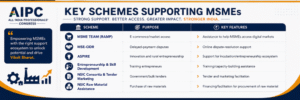
Pasupuleti also said MSME policy should ensure that enterprises were not discouraged from scaling up because of the fear of losing protections and benefits after crossing classification thresholds.
“A good MSME policy should help a micro enterprise become small, a small enterprise become medium and a medium enterprise become a large competitive business. Growth should be the objective, not something that creates regulatory anxiety,” he said.
He called for transition periods when enterprises move from one classification to another and for a review of payment protections available to growing businesses.
Pasupuleti said the Centre should now focus on five measurable outcomes — timely payments, affordable institutional credit, easier compliance, access to technology and finance for expansion, and a credible support system for first-generation entrepreneurs.
“The Amendment Bill can improve one part of the MSME ecosystem. But India’s MSME challenge will not be solved by one more law or one more scheme announcement. The real test is whether an entrepreneur can obtain finance without unnecessary hurdles, receive payments on time and confidently grow the business,” he said.
