
By Soniya:
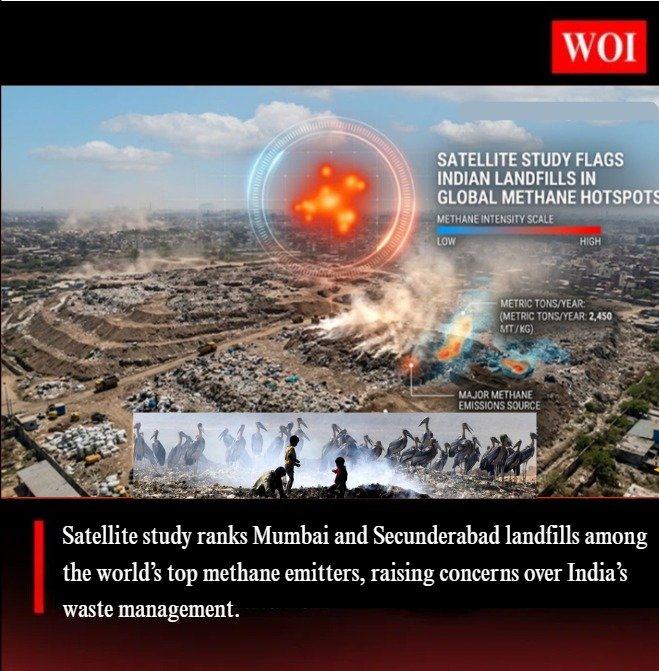
A recent satellite-based global study has identified landfill sites in Mumbai and Secunderabad among the world’s top 25 methane-emitting waste sites in 2025. The findings raise serious concerns about India’s waste management systems and their impact on climate change.
The study, based on thousands of methane plume observations, analyzed nearly 3,000 emissions across hundreds of global waste sites. Using satellite data from Carbon Mapper and research by the University of California Los Angeles, it pinpointed major pollution hotspots, including two in India.
Methane, a potent greenhouse gas, is significantly more harmful than carbon dioxide in the short term and is responsible for a large share of global warming. According to the International Energy Agency, methane levels today are far higher than pre-industrial times. Landfills become major sources of methane when organic waste decomposes without oxygen.
The study highlights that top landfill sites emit several tonnes of methane per hour—comparable to emissions from large-scale industrial sources. It also underscores the urgent need for improved landfill practices, better waste segregation, and stronger climate action.
By using advanced satellite monitoring, researchers were able to accurately track emission sources, increasing transparency and accountability. The findings serve as a wake-up call for policymakers to address waste management challenges and reduce methane emissions in India.
