
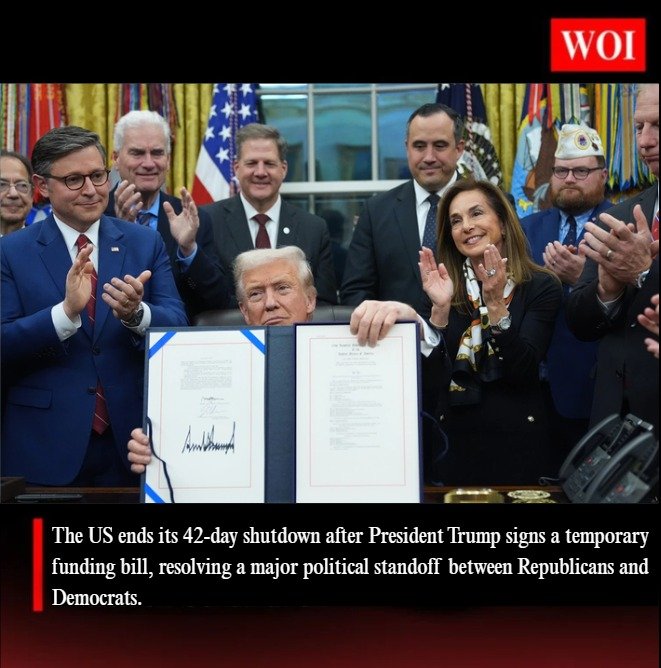
The longest government shutdown in US history has officially ended after 42 days, with President Donald Trump signing a temporary funding bill passed by Congress. The move comes after weeks of political deadlock that disrupted federal services and left hundreds of thousands of government employees unpaid.
Why the Shutdown Happened
The shutdown began due to a standoff between Republicans and Democrats over funding for healthcare subsidies under the Affordable Care Act (Obamacare). Democrats demanded that these subsidies be included in the funding bill, while Republicans, led by President Trump, refused — resulting in a prolonged impasse.
How the Deadlock Broke
In the US Senate, most bills require 60 votes to advance. Although Republicans held the majority, they lacked the supermajority needed to move the legislation forward. The breakthrough came when eight Democrats crossed party lines, allowing the bill to proceed and eventually pass, clearing the way for the President’s signature.
Political Outcome
The temporary agreement is widely seen as a setback for Democrats, who failed to secure the Obamacare subsidy extensions they fought for. Republicans gained the upper hand, but only temporarily — the larger budget issues remain unresolved.
Impact of the 42-Day Shutdown
- Federal employees were furloughed or worked without pay
- Key services such as national parks, IRS operations, and visa processing were disrupted
- Economic losses ran into billions of dollars
- Political tensions rose as both parties blamed each other
What’s Next?
The current bill only funds government operations for a limited period. Major issues — healthcare funding, immigration policy, and debt concerns — still remain. Without a long-term budget, another shutdown cannot be ruled out in the coming weeks.
