
BY state bureau
Srisailam and Amrabad: Scientists Call for Balanced Development and Conservation in the Nallamala Forests
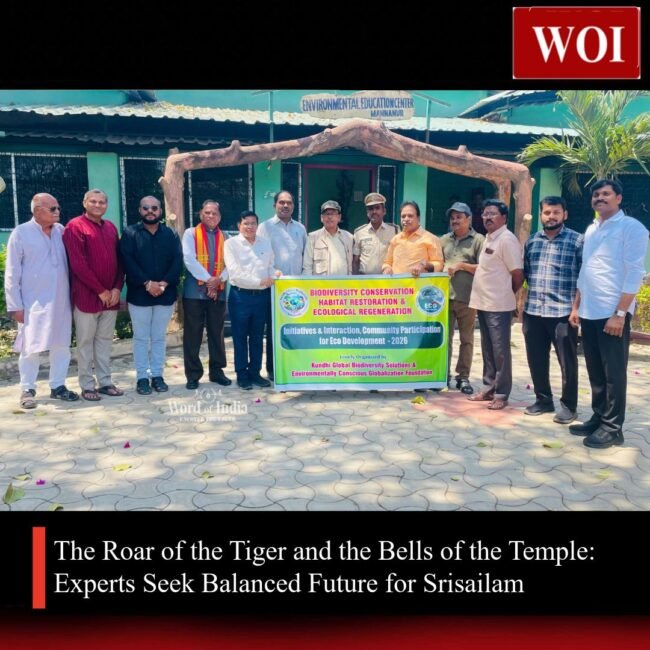
Scientists and Policy Experts Study Ecology and Development Needs of Srisailam
A multidisciplinary delegation of environmental scientists, conservationists, legal experts, and technologists recently conducted a detailed ecological exploration and consultation in the sacred region of Srisailam Temple in Andhra Pradesh and the surrounding forests of the Nallamala Hills.
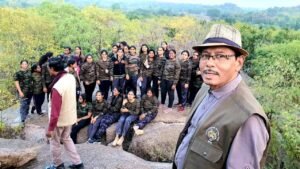
The three-day exploration was led by veteran forest scientist Dr. Thulsirao, a retired Indian Forest Service officer who served nearly 18 years in the Srisailam forest landscape, and was coordinated by environmental activist and pediatric specialist Dr. Markenduyulu.
The initiative, organised under Global Biodiversity Solutions (GBS) and Environmentally Conscious Globalisation (ECG), brought together experts from various fields to examine the ecological importance of the Nallamala forests while discussing the growing development needs of Srisailam as one of India’s most important pilgrimage centres.
 A Sacred Shrine Within a Protected Forest Landscape
Srisailam Temple, one of the twelve Jyotirlinga shrines dedicated to Lord Shiva, stands deep within the Nallamala hills. The temple is located inside the ecological zone of the Nagarjunsagar–Srisailam Tiger Reserve, one of the largest tiger habitats in India.
Every year millions of devotees visit the shrine, especially during major festivals such as Maha Shivaratri and Karthika Masam. Experts participating in the consultation observed that Srisailam represents a rare convergence of spiritual heritage, biodiversity conservation, and ecological responsibility.
However, the increasing number of pilgrims has also highlighted the need to balance spiritual tourism with environmental sustainability.
Field Exploration of Ecological Sites
During the visit, the delegation explored several ecological and research locations to understand the biodiversity and environmental dynamics of the region.
 Visit to the Biological Park
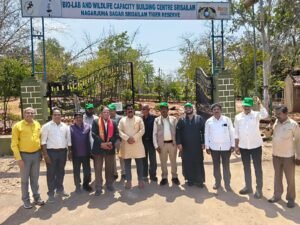
The team visited the Srisailam Biological Park where discussions focused on wildlife conservation and biodiversity education. Experts noted that such facilities can help create awareness among pilgrims and tourists about wildlife species found in the Nallamala forests.
Forest Research Laboratory
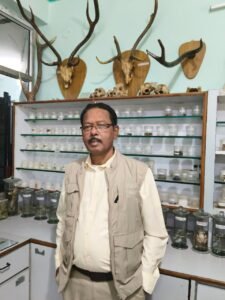
The delegation also inspected the Forest Research Laboratory established during the tenure of Dr. Thulsirao. The laboratory was created to support biodiversity documentation, research on forest insects and species, environmental monitoring, and training of forest officials.
Many of the research practices introduced during that period continue to guide conservation efforts today.
Study of Krishna River Backwaters
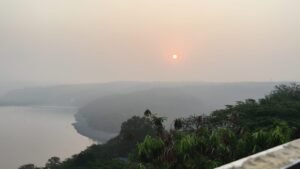
Participants also visited the Krishna River backwater region behind the temple where the river flows through deep forest valleys. Experts noted that the river ecosystem plays a vital role in sustaining wildlife habitats and maintaining ecological balance within the Nallamala landscape.
Forest Safari in the Nallamala Hills
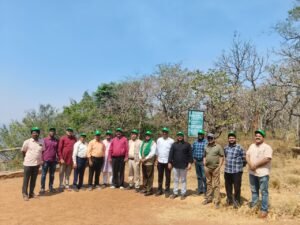
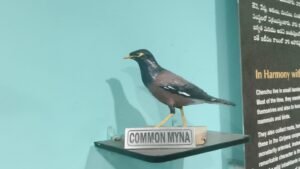
The delegation undertook a forest safari through the Nallamala terrain, observing wildlife habitats and forest vegetation patterns. During the safari, discussions focused on wildlife migration corridors, prevention of wildlife road accidents, and the ecological impact of climate variations.
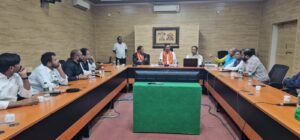 Meeting with Temple Administration
The delegation also met K. S. Rama Rao, Executive Officer of Srisailam Temple, to discuss development challenges faced by the temple town.
Participants acknowledged the initiatives taken by the temple administration in addressing the growing needs of devotees while preserving the spiritual and environmental integrity of the region.
The delegation thanked the Executive Officer for facilitating discussions and supporting efforts to examine the future development of Srisailam.
Present Temple Land and Future Development Needs
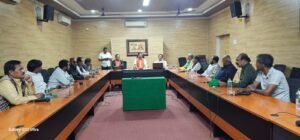
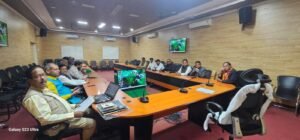 At present, the developed temple town and associated infrastructure occupy approximately 1,500 to 1,700 acres under the Devasthanam.
This land includes the main temple complex, pilgrim accommodation facilities, administrative offices, guest houses and dharmashalas, and internal roads and public infrastructure.
Experts noted that the existing land area is insufficient to meet the needs of the increasing number of pilgrims visiting Srisailam every year.
Proposals have therefore been discussed for allocating around 2,000 hectares of surrounding land, approximately 4,940 acres, for future development.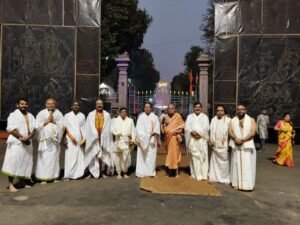
This expansion could enable the construction of large pilgrim accommodation complexes, organised vehicle parking areas, improved traffic management systems, sanitation and waste management infrastructure, and tourism facilities connected to temple activities.
Experts emphasised that such development must follow eco-sensitive planning to ensure that the surrounding forest ecosystem remains protected.
Innovative Transport Ideas for Pilgrims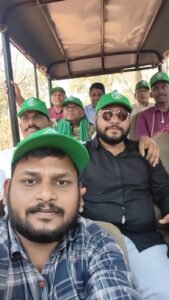
The consultation also explored innovative ideas to improve connectivity and reduce congestion around the temple.
Experts suggested the construction of hanging bridges across valleys, ropeway transportation systems, tunnel routes through the hills, and future transport technologies such as aerial or flying transport systems.
These initiatives could significantly reduce travel time for pilgrims while minimizing environmental impact.
 ➤ Conservation Legacy of Dr. Thulsirao
Participants also recognised the contributions made by Dr. Thulsirao during his service in the Nallamala forests.
His work included studying wildlife habitats and migration patterns, documenting biodiversity including insects and rare species, establishing forest research facilities, and promoting plantation and forest restoration programs.
These efforts played an important role in strengthening the ecological significance of the region, which later became part of the Nagarjunsagar–Srisailam Tiger Reserve covering nearly 3,600 square kilometres.
 ➤ Biodiversity Protection and Tribal Welfare
Dr. Thulsirao also worked closely with the Chenchu tribal community, the traditional inhabitants of the Nallamala forests.
Through awareness programs and livelihood initiatives, tribal communities were encouraged to participate in forest conservation and adopt sustainable economic activities.
These efforts helped reduce forest fires and strengthened cooperation between forest authorities and local communities.
Dr. Thulsirao – Retired IFS Officer
Dr. Thulsirao emphasised that the presence of tigers reflects the health of the forest ecosystem and called for continued scientific monitoring and conservation of wildlife habitats.
Experts Participating in the Consultation and Their Observations
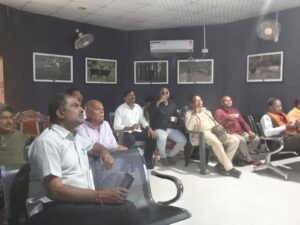
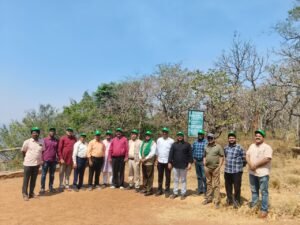 ➤ Dr. Markenduyulu – Pediatric Specialist an Environmental Activist
Dr. Markenduyulu emphasised the importance of environmental awareness among children and the role of education in building a future generation committed to conservation.
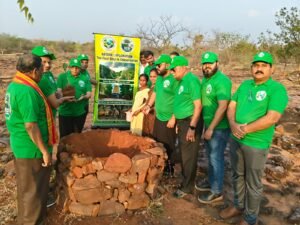 ➤ Pasupuleti Shashank – TPCC Legal Cell Coordinator and State Head of MSME
Pasupuleti Shashank stated that he would extend legal support and assistance from Telangana for the protection and development of Srisailam Temple. Speaking as TPCC Legal Cell Coordinator, he said he would stand with the temple administration and fight for justice and lawful development whenever required. He also thanked Executive Officer K. S. Rama Rao for the initiatives taken to improve temple administration and infrastructure.
➤ Lalit Kotturi – Electrical Discipline Leader, Scotland
Lalit Kotturi highlighted the relationship between spirituality and nature, suggesting that sustainable engineering solutions can improve infrastructure while protecting forest ecosystems.
➤ C. Sudharshan – Environmental Chemist
C. Sudharshan discussed the importance of maintaining ecological balance in forest ecosystems, including soil health and water quality.
➤ S. Santhan Kumar – Former Group Director, Indian Space Research Organisation
Santhan Kumar explained how satellite technology can help monitor forest cover and wildlife movement across large landscapes.
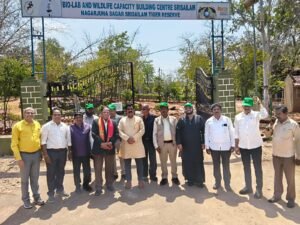 ➤ L. Venkat Rama Reddy – Former Commissioner of Horticulture and Sericulture
Venkat Rama Reddy highlighted the importance of sustainable horticulture and eco-friendly plantation practices.
➤ Dr. B. Prabhakar – Chief Conservator of Forests
Dr. Prabhakar emphasised the need for strong conservation policies and coordinated forest management.
➤ Dr. J. Ramaswamy – Educationist
Dr. Ramaswamy stressed the importance of environmental education in schools and universities.
➤ Dr. S. Ravinder – Expert Member, National Biodiversity Authority
Dr. Ravinder highlighted the importance of protecting biodiversity hotspots such as the Nallamala forests.
 ➤ Dayakar Reddy – Former General Manager, Bharat Dynamics Limited
Dayakar Reddy emphasised that environmental protection must be treated as a national priority.
➤ Dr. Ashok Kumar – Child Psychologist
Dr. Ashok Kumar spoke about the psychological and health benefits of exposure to nature.
➤ Izrayel Yadav – High Court Advocate
Izrayel Yadav highlighted the role of environmental laws in protecting forests from encroachment and illegal activities.
➤ Marati Dinesh – High Court Advocate and Nature Protector
Marati Dinesh emphasised the importance of community participation in conservation efforts. 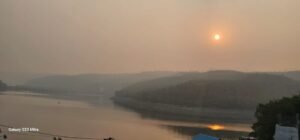
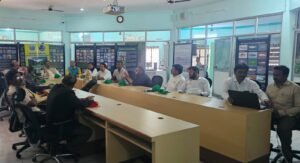
The consultation brought together experts from diverse fields including environmental science, forestry, law, agriculture, technology, and social development.
Towards a Model of Eco-Spiritual Tourism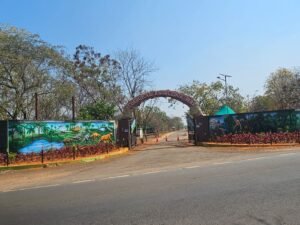
Experts concluded that Srisailam represents a unique meeting point of faith and nature.
With scientific planning, responsible governance, and coordinated efforts among scientists, policymakers, and community stakeholders, the region has the potential to become a global model for eco-spiritual tourism.
Participants emphasised that the future of Srisailam must ensure that both the sacred heritage of the temple and the ecological richness of the Nallamala forests are preserved for generations to come.
