
By Soniya:
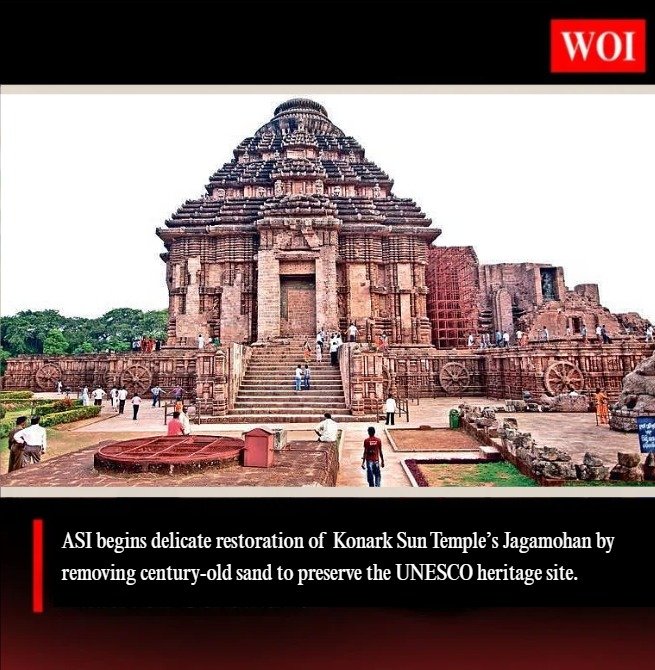
The Archaeological Survey of India has launched a significant conservation project at the Konark Sun Temple, a UNESCO World Heritage Site known for its architectural brilliance. The initiative focuses on restoring the temple’s Jagamohan (assembly hall) by carefully removing sand that was filled over a century ago to stabilize the structure.
Between 1901 and 1903, British engineers packed the Jagamohan with sand to prevent collapse. While effective at the time, this method sealed the interior and limited further study and conservation. With modern technology now available, ASI is reversing this intervention through a controlled and scientific process.
The restoration involves drilling a carefully planned passage using advanced techniques to avoid structural damage, followed by gradual sand removal and continuous monitoring. Experts emphasize that the process is delicate and may take considerable time to ensure the monument’s safety.
Built in the 13th century by King Narasimhadeva I, the Konark Sun Temple is designed as a grand chariot dedicated to the Sun God. The ongoing project is expected to enhance understanding of the temple’s internal structure while preserving its heritage for future generations.
