
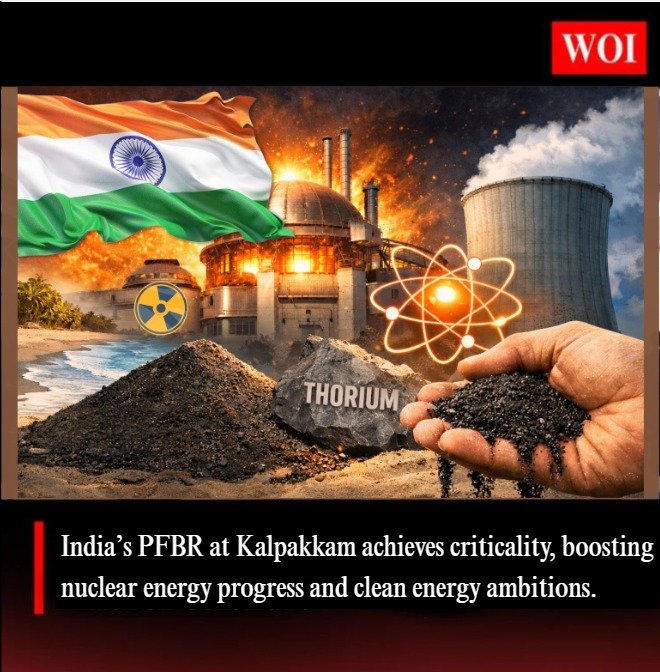
India has reached a significant milestone in its nuclear energy journey as the indigenously developed Prototype Fast Breeder Reactor (PFBR) at Kalpakkam has successfully attained criticality. The achievement marks a major step forward in strengthening the country’s advanced nuclear capabilities and long-term clean energy goals. Prime Minister Narendra Modi described the development as a defining moment for India’s scientific and technological progress.
The 500 MW PFBR, developed and operated by Bharatiya Nabhikiya Vidyut Nigam Limited, is a key component of India’s three-stage nuclear programme. With this milestone, India moves closer to becoming one of the few nations with operational fast breeder reactor technology, following countries like Russia.
Criticality refers to the stage where a self-sustaining nuclear chain reaction begins within the reactor core. Achieving this confirms that the reactor design, safety systems, and operational parameters are functioning as intended, paving the way for power generation.
Fast Breeder Reactors are unique because they produce more fuel than they consume, using plutonium-based fuel and enhancing overall efficiency. This is particularly important for India, which has limited uranium resources but abundant thorium reserves.
The PFBR plays a crucial role in advancing the second stage of India’s nuclear programme and accelerating the transition towards thorium-based energy in the future. It also reflects the country’s commitment to clean, low-carbon energy and self-reliance, with contributions from over 200 Indian industries.
Overall, this achievement positions India as a rising leader in advanced nuclear technology while reinforcing its vision of sustainable and secure energy for the future.
