
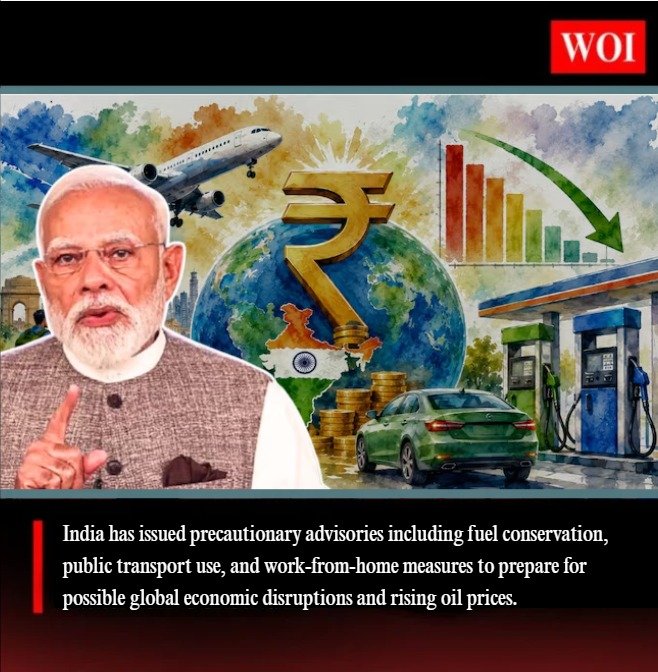
Prime Minister Narendra Modi has urged citizens to adopt precautionary habits such as reducing fuel consumption, avoiding unnecessary travel, and encouraging work-from-home practices as global economic uncertainty continues to rise. The appeal comes amid growing concerns over geopolitical tensions, oil price fluctuations, inflation risks, and pressure on India’s import-dependent economy.
India imports nearly 85–90% of its crude oil requirements, making the country highly sensitive to disruptions in global energy markets. Rising tensions in West Asia and fears of supply-chain disturbances have increased concerns over higher petrol and diesel prices, transportation costs, and inflation affecting ordinary households.
As part of a broader preparedness strategy, the Prime Minister highlighted several advisory measures aimed at reducing fuel dependency and import pressure. These include promoting public transport, encouraging carpooling, increasing online meetings, shifting goods transport towards railways, and reviving work-from-home culture wherever possible.
The government also advised citizens to avoid non-essential foreign travel, postpone overseas destination weddings, reduce unnecessary gold purchases, and support “Made in India” products. In the agriculture sector, the focus has been placed on reducing chemical fertilizer use, promoting natural farming, and encouraging sustainable practices.
Additionally, the push for electric vehicles, solar-powered systems, and reduced edible oil consumption has been linked to both economic resilience and long-term sustainability goals.
Economists believe these advisories are intended to prepare the country for possible global economic shocks before they directly impact household expenses and inflation. The emphasis on work-from-home is viewed as a practical measure to reduce fuel demand, traffic congestion, and operational costs rather than a return to pandemic-style restrictions.
The initiative reflects India’s broader strategy of economic preparedness, energy conservation, and self-reliance during a period of international uncertainty and volatile global markets.
