
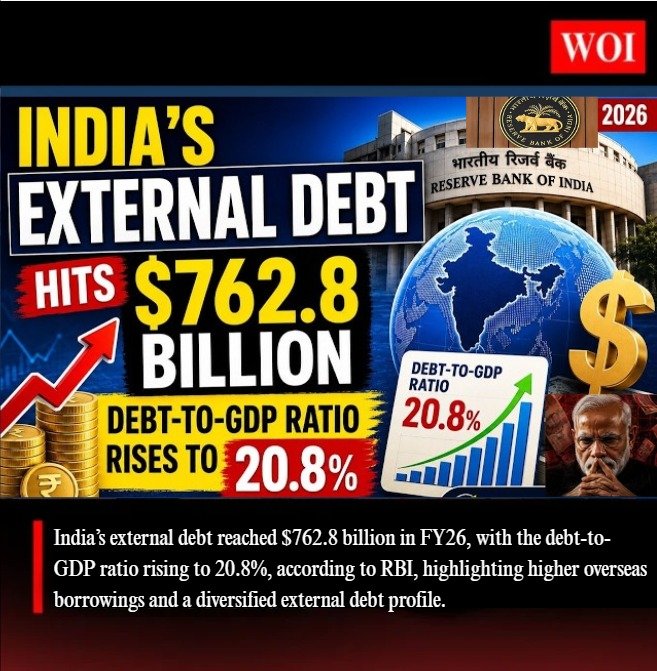
India’s external debt increased to $762.8 billion at the end of FY2025–26, registering a rise of $26.3 billion over the previous year, according to the latest data released by the Reserve Bank of India (RBI). The country’s external debt-to-GDP ratio also rose from 19.8% in FY25 to 20.8% in FY26, reflecting higher overseas borrowings.
According to the RBI, valuation effects due to the appreciation of the US dollar reduced the reported increase in external debt by $24.6 billion. Without this adjustment, the total increase would have been around $51 billion. The US dollar remained the largest component of India’s external debt, accounting for 55.5%, followed by the Indian Rupee (29.4%), Japanese Yen (6.4%), Special Drawing Rights (4.3%), and the Euro (3.7%).
The RBI data also showed that long-term external debt increased to $613.5 billion, while short-term debt rose to 19.6% of total external debt, indicating a larger share of obligations maturing within one year. The ratio of short-term debt to foreign exchange reserves also increased from 20.1% to 21.6%.
Despite the rise in external liabilities, the RBI noted that India’s external debt profile remains well-diversified across currencies and maturities. The central bank continues to closely monitor external sector indicators, foreign exchange reserves, and capital flows to ensure macroeconomic stability and support sustainable economic growth.
