
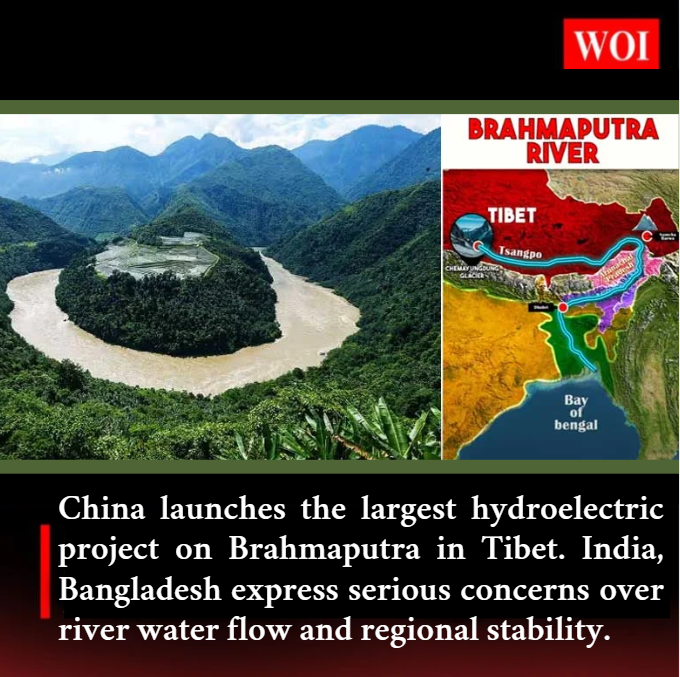
In a bold infrastructural move, China has started the construction of a massive hydroelectric power project on the Brahmaputra River, known as Yarlung Tsangpo in Tibet. This project, located in the upper reaches of the river, forms part of China’s 14th Five-Year Plan and is expected to become the world’s largest hydroelectric power station.
An estimated investment of 16.78 billion yuan (approx. ₹14,000 crore) has been earmarked for the first phase of the project. The proposed dam aims to generate 300 billion kilowatt-hours of electricity annually—30 times more than the output of China’s second-largest dam, Baihetan.
While China hails the project as a major step towards energy security, it has triggered geopolitical and environmental concerns in downstream nations. India and Bangladesh, both heavily reliant on the river’s flow, have raised serious objections fearing ecological disruption and reduction in water availability.
Experts warn that altering the natural flow of the Brahmaputra could have devastating effects on agriculture, fisheries, and biodiversity in northeastern India and Bangladesh. India continues to press the issue diplomatically, urging China to maintain transparency and consider downstream implications.
Additionally, environmentalists stress that large-scale damming of rivers in seismic regions like Tibet can lead to unpredictable consequences including landslides, water stress, and sediment imbalance.
As construction moves ahead, the world watches closely, with hopes for dialogue, environmental responsibility, and regional cooperation.
