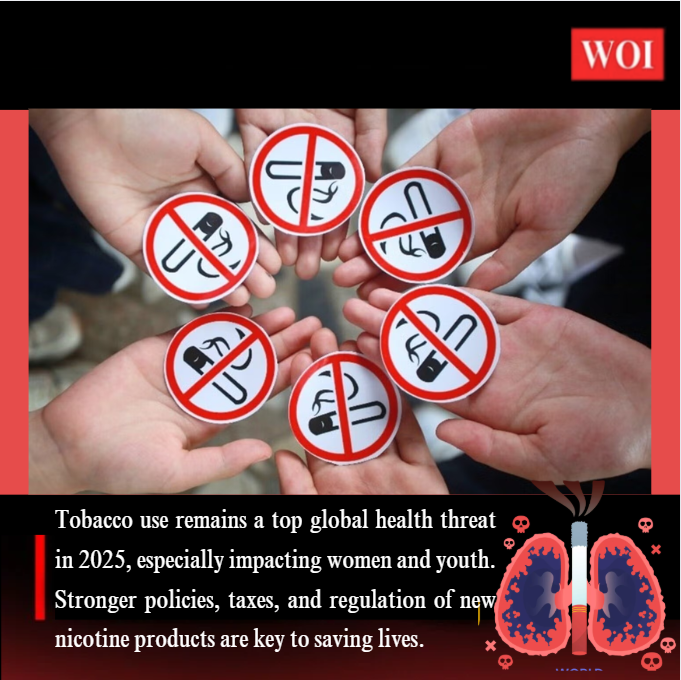
The global tobacco epidemic remains a major public health challenge in 2025, claiming around 7.3 million lives annually. Despite growing awareness, the spread of traditional and new nicotine products continues to endanger health worldwide.
Women face heightened risks, with second-hand smoke responsible for 64% of related female deaths. Diseases like lung cancer now surpass breast cancer fatalities in several countries. The emergence of e-cigarettes and heated tobacco products adds complexity to control efforts, especially with aggressive marketing targeting youth.
Tobacco control efforts are also hampered by industry interference and funding gaps. While WHO’s MPOWER strategies offer proven tools—such as higher taxes, smoke-free laws, and advertising bans—implementation remains uneven. For example, only 1.2 billion people live in countries with optimal tobacco tax policies.
Yet, progress is possible. A $1 tax hike per pack reduces consumption significantly, while graphic health warnings now cover over 5.1 billion people. Stronger regulation of new nicotine devices and a focus on protecting women and youth are crucial.
Comprehensive policies, global cooperation, and increased investment in public health can turn the tide against tobacco and safeguard future generations.
