
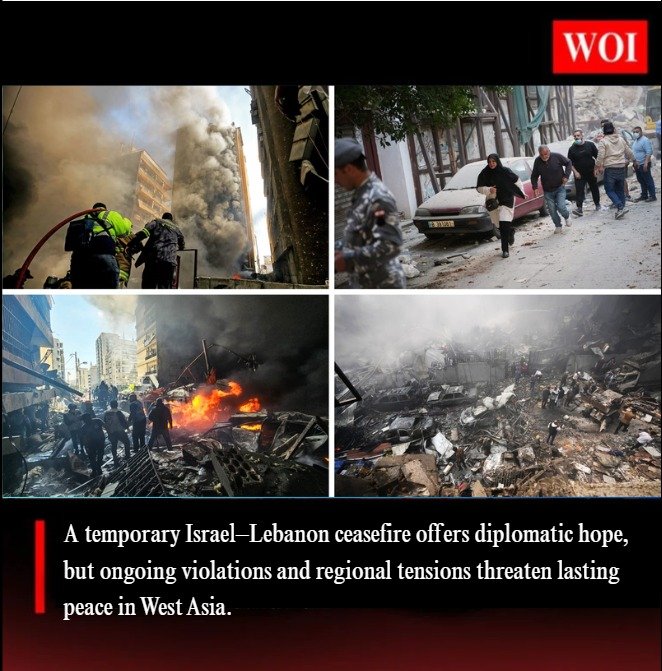
Tensions in West Asia remain high despite a temporary 10-day ceasefire announced between Israel and Lebanon, set to begin at 21:00 GMT. The truce, declared after diplomatic efforts led by the United States, was intended to create space for broader negotiations. However, continued reports of violence on the ground have cast doubt on its durability.
US President Donald Trump stated that the ceasefire followed consultations with Lebanese leadership and could be extended if diplomatic progress is achieved, including possible talks involving Iran. Despite this, reports of shelling in southern Lebanon have emerged, with Beirut accusing Israeli forces of violations. Israel has said it is assessing the situation, citing “self-defence” clauses.
The role of regional actors remains critical. Hezbollah has linked its commitment to a full halt in Israeli operations, while Iran has cautiously welcomed the truce. Meanwhile, the conflict continues to affect global energy markets, with risks linked to the strategic Strait of Hormuz keeping investors on edge.
Overall, while the ceasefire signals diplomatic intent, ongoing hostilities underline the fragile and uncertain path toward lasting de-escalation in the region.
