
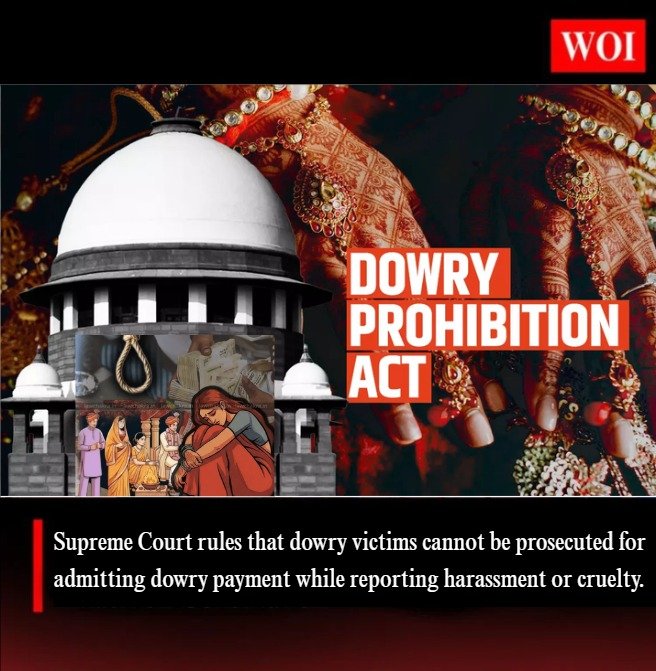
In a significant judgment, the Supreme Court of India has clarified that persons who give dowry—such as a bride or her family—cannot be prosecuted under the Dowry Prohibition Act if they are the aggrieved party in a matrimonial dispute. The ruling came while rejecting a plea by a husband seeking criminal action against his wife and in-laws after they disclosed that dowry had been paid at the time of marriage.
A bench comprising Justices Sanjay Kumar and K. Vinod Chandran explained that although the Dowry Prohibition Act, 1961 criminalises both the giving and taking of dowry, Section 7(3) provides a crucial safeguard. This provision protects aggrieved persons from prosecution when they admit to giving dowry while reporting cruelty, domestic violence, or dowry-related harassment.
The court emphasised that this safeguard reflects social realities, as dowry payments are often made under coercion, pressure, or fear rather than free consent. Prosecuting such disclosures would discourage victims from approaching the justice system and weaken efforts to curb dowry-linked abuse.
The judgment also noted that Parliament introduced this protection following recommendations of a joint parliamentary committee, recognising that dowry givers—especially the bride’s family—are frequently victims rather than offenders. Overall, the ruling reinforces a victim-centric interpretation of anti-dowry law and strengthens legal protection for women and families seeking justice against dowry-related cruelty.
