
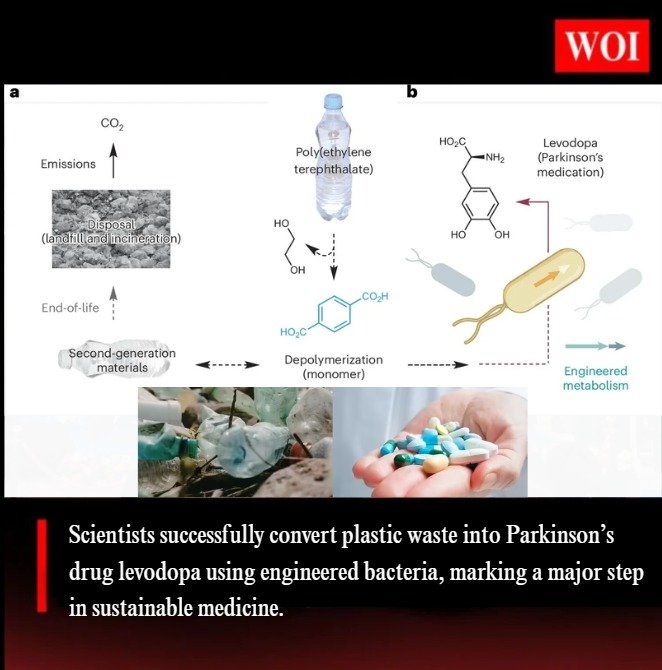
In a major scientific breakthrough, researchers have developed a method to convert plastic waste into levodopa, a key drug used to treat Parkinson’s disease. This innovation offers a sustainable approach to both waste management and pharmaceutical production.
Scientists at the University of Edinburgh engineered E. coli bacteria to break down PET plastic, commonly found in bottles and packaging. The bacteria use the carbon from plastic to produce levodopa, demonstrating how discarded materials can be transformed into valuable medical resources.
Levodopa is widely used to manage symptoms of Parkinson’s disease, which affects over 10 million people globally. As demand for the drug rises, this method could provide a more eco-friendly and scalable production alternative.
Beyond medical benefits, the process also reduces reliance on fossil fuels and supports a circular economy. However, large-scale implementation will require further research, investment, and regulatory approvals before it becomes commercially viable.
