
By Soniya:
The global arms trade has undergone a major shift in recent years as countries respond to rising conflicts and security threats. According to a 2026 report by Stockholm International Peace Research Institute (SIPRI), international arms transfers rose by about 9.2% between 2016–20 and 2021–25, reflecting growing global militarisation.
Ukraine Tops the List
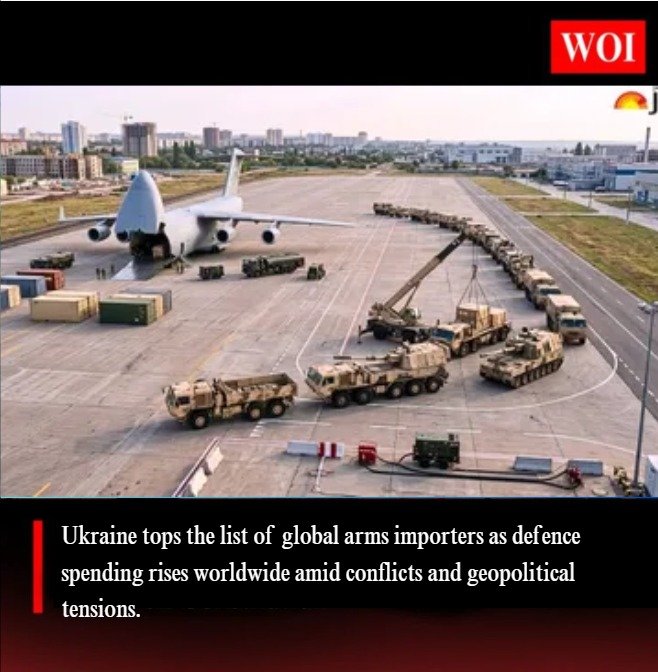
Currently, Ukraine is the world’s largest arms importer. Between 2021 and 2025, it accounted for nearly 9.5% of all global arms imports. This dramatic rise is directly linked to the ongoing war with Russia, with Ukraine receiving extensive military support from countries such as the United States, Germany and Poland to bolster its defence capabilities.
Top 5 Largest Arms Importers (2021–2025)
- India – 8.2%
Focuses on military modernisation; major suppliers include Russia, France and Israel. - Saudi Arabia – 6.8%
Heavy dependence on US arms amid persistent regional tensions. - Qatar – 6.4%
Rapid expansion of air and naval forces with imports from the US, Italy and the UK. - Pakistan – 4.2%
Relies largely on China for defence supplies due to regional security challenges.
Key Global Trends
Europe has witnessed the sharpest increase in arms imports—over 200% growth—largely due to the Russia–Ukraine conflict. In contrast, arms imports declined in Asia and the Middle East, partly because countries like China are increasingly producing indigenous military equipment.
Largest Arms Exporters
The United States remains the world’s biggest arms exporter with a 42% global share, followed by France. Russia has slipped to third place as its exports fall due to domestic military needs and shrinking markets.
Overall, the data highlights how conflict and geopolitical tensions are reshaping global defence priorities and arms flows worldwide.
