
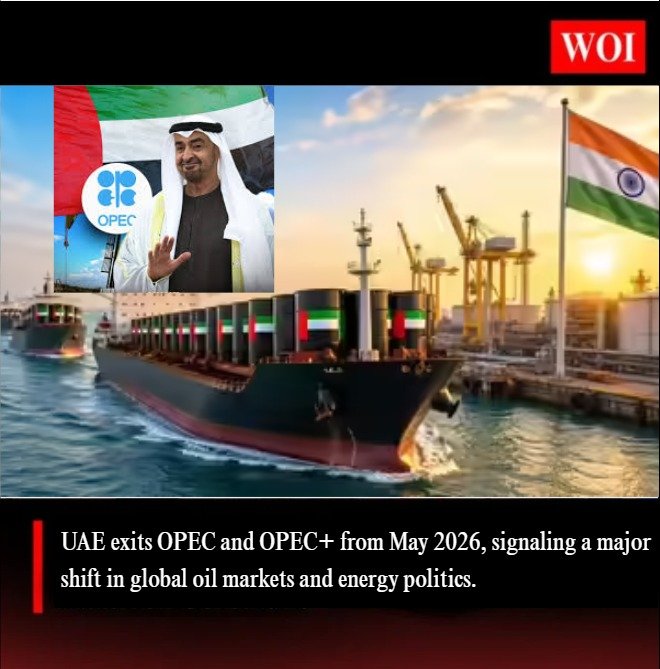
The United Arab Emirates has announced its decision to exit Organization of the Petroleum Exporting Countries and the broader OPEC+ from May 1, 2026, marking a significant shift in global energy politics. The move comes at a time of heightened instability in oil markets driven by geopolitical tensions and supply disruptions.
According to UAE Energy Minister Suhail Mohamed al-Mazrouei, the decision reflects the country’s long-term strategic priorities and growing production ambitions. The UAE has increasingly sought flexibility in oil output, which has been constrained under OPEC’s quota-based system.
The exit is expected to impact the internal balance of OPEC, where the UAE has been a major producer with substantial output capacity. Its departure could weaken the group’s ability to control supply and stabilize global oil prices, placing more responsibility on key members like Saudi Arabia.
The timing is particularly critical due to ongoing tensions affecting oil transport through the Strait of Hormuz, a vital global energy route. Disruptions in this region have already heightened risks and costs in international energy markets.
Analysts suggest that the UAE’s move signals a broader shift among major oil producers toward prioritizing national interests over collective cartel policies, potentially reshaping the future of global oil governance.
