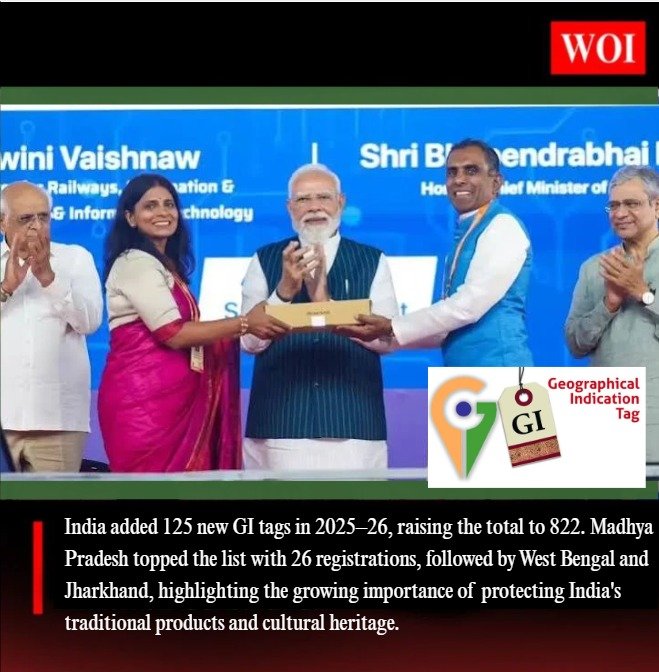
India recorded a significant milestone in the protection of its traditional products by registering 125 new Geographical Indications (GI) during the financial year 2025–26, taking the country’s total number of registered GI products to 822. While Madhya Pradesh emerged as the top performer with 26 new GI registrations, West Bengal followed closely with 24, highlighting the growing contribution of eastern India in preserving its rich cultural and agricultural heritage.
Geographical Indications (GIs) are a form of intellectual property that recognize products whose quality, reputation, or characteristics are closely linked to their place of origin. Governed by the Geographical Indications of Goods (Registration and Protection) Act, 1999, GI tags help protect traditional knowledge, enhance product value, boost exports, and provide better market opportunities for artisans and farmers.
Madhya Pradesh received GI recognition for several handicrafts and traditional agricultural products, including Khajuraho Stone Craft, Betul Bharewa Metal Craft, Gwalior Paper Mache Craft, and indigenous crops such as Sitahi Kutki and Baigani Arhar. West Bengal added 24 new GI products, including Jalbhara Sandesh, Santiniketan Batik, Banglar Nolen Gur, Krishnanagar Clay Dolls, and Balagarh Boat, further strengthening its reputation for traditional crafts and food products.
Jharkhand also made remarkable progress by securing 11 new GI registrations, covering products such as Tussar Silk Sarees, Dokra Craft, Bamboo Crafts, Jadupatia Paintings, and Kesharia Kalakand, reflecting the state’s rich tribal and handloom heritage.
Among India’s 822 registered GI products, handicrafts account for around 53%, while agricultural products make up nearly 31%, showcasing the country’s diverse cultural, artistic, and agricultural traditions. The steady rise in GI registrations demonstrates India’s growing commitment to safeguarding indigenous products, promoting rural livelihoods, and strengthening the global identity of its unique regional specialties.
