
By Soniya:
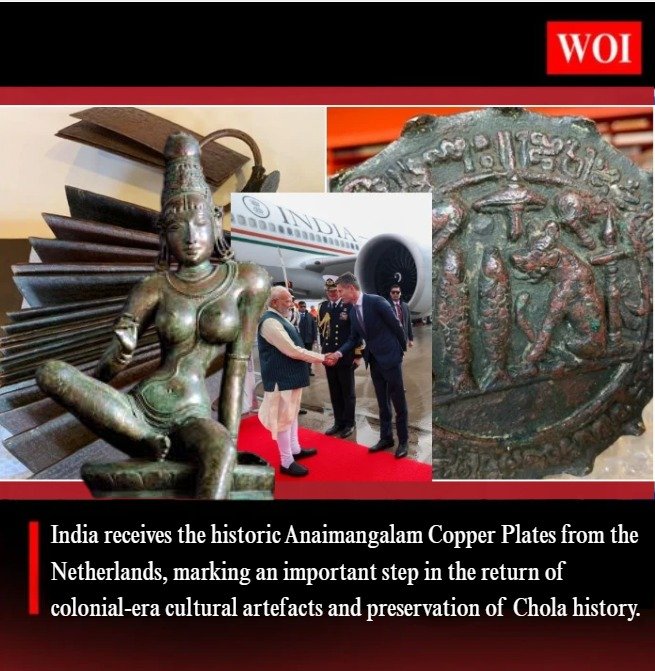
The Netherlands has officially returned the historic Anaimangalam copper plates to India on 15 May 2026, marking an important step in the global movement for the repatriation of cultural heritage. The artefacts, also known as the Leiden Plates, belong to the Chola dynasty period and date back to the reign of Rajaraja Chola I (985–1014 CE).
These copper plates are among the most significant historical records from medieval South India. They contain inscriptions related to land grants, tax arrangements, and administrative orders issued for the Chudamani Vihara, a Buddhist monastery located at Nagapattinam in present-day Tamil Nadu.
The collection includes 21 large and three smaller copper plates weighing nearly 30 kilograms. They are connected through a copper ring embossed with the royal Chola seal, reflecting the advanced administrative and inscription traditions of the Chola Empire.
For more than a century, the plates remained at Leiden University in the Netherlands. Historical records show that Dutch official Florentius Camper acquired them during the 18th century from the Coromandel Coast, then part of the Dutch colonial sphere in India.
The return follows diplomatic discussions between India, the Dutch government, and Leiden University under the Netherlands’ 2022 restitution policy for colonial-era artefacts. The repatriation is being viewed as an important cultural and historical gesture recognising the significance of restoring heritage objects to their countries of origin.
The Chola dynasty, which ruled large parts of South India between the 9th and 13th centuries CE, is known for its maritime power, temple architecture, and administrative systems. Rajaraja Chola I, one of its greatest rulers, also built the Brihadisvara Temple in Thanjavur, now a UNESCO World Heritage Site.
The return of the Anaimangalam copper plates highlights growing international efforts to address colonial-era cultural acquisitions and restore historically important artefacts to their original civilisations.
