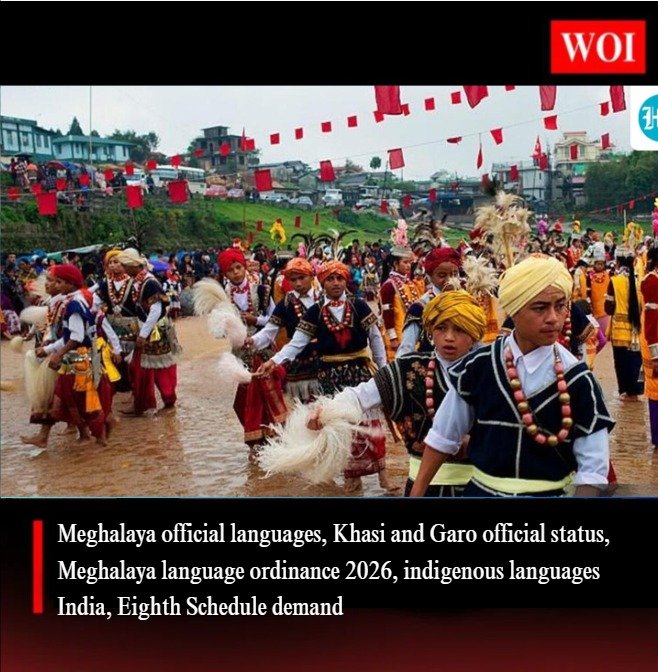
Meghalaya has taken a landmark step in recognising its linguistic and cultural diversity by granting full official status to its two major indigenous languages, Khasi and Garo. On 16 April 2026, the state cabinet approved the Meghalaya Official Languages Ordinance, 2026, placing both languages on the same official footing as English. The move repeals the Meghalaya State Language Act, 2005, under which English had remained the sole official language and Khasi and Garo were treated only as associate official languages.
Chief Minister Conrad K. Sangma described the decision as historic, highlighting its importance for identity, representation and tribal heritage. While English will continue as the principal link language for inter-district communication and formal administrative processes, the ordinance allows wider use of Khasi and Garo in government notifications, orders and public communication.
The reform is expected to improve citizens’ access to governance, especially for those more comfortable in their mother tongues. It may also influence education and recruitment, as the state plans to gradually introduce competitive examinations in Khasi and Garo alongside English, potentially expanding opportunities for candidates from rural and tribal areas.
Politically, the move carries broader significance. By strengthening the official status of Khasi and Garo within Meghalaya, the government aims to reinforce its long-standing demand for inclusion of these languages in the Eighth Schedule of the Constitution. The ordinance thus represents not just administrative reform, but a strong assertion of linguistic rights, federal recognition and cultural preservation.
